Blog

  • AI Agent for Ecommerce: How Shopify Clothing Stores Can Automate Customer Support

    AI Agent for Ecommerce: How Shopify Clothing Stores Can Automate Customer Support

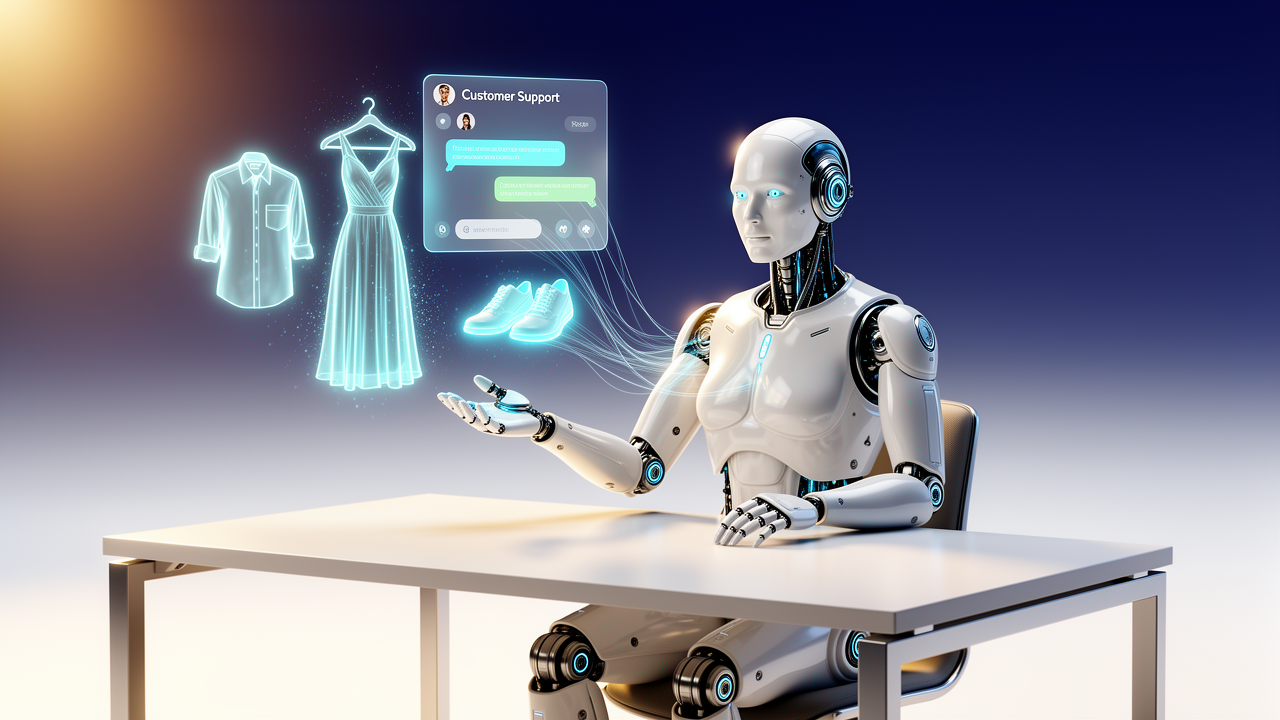
    An ai agent for ecommerce is an autonomous software system that uses artificial intelligence to anticipate customer needs, personalize shopping experiences, and automate complex workflows across the entire customer journey—from browsing to purchase to post-sale support.

    So there I was, staring at my laptop at 2 a.m., trying to figure out why our customer support queue had exploded to 847 unanswered messages. Classic online retail problem, right? Turns out, we weren’t the only ones drowning in “Where’s my order?” emails and “Does this come in blue?” inquiries.

    That’s when I stumbled into the world of AI agents—not the clunky chatbots that make you wanna throw your phone across the room, but actual intelligent systems that can handle real conversations and make decisions. And honestly? It’s changed everything about how modern e-commerce operates.

    The shift happening right now isn’t just about answering questions faster. It’s about fundamentally reimagining what an online store can be when it’s powered by something that actually thinks.

    What Makes an AI Agent for Ecommerce Different from Regular Chatbots

    Let’s pause for a sec and clarify what we’re actually talking about here. Traditional chatbots follow scripts—if customer says X, respond with Y. They’re glorified decision trees wearing a conversational mask.

    AI agents? Totally different beast. These systems combine multiple layers of intelligence that work together like a well-oiled machine (or at least like a machine that’s had its morning coffee).

    The Four Pillars That Define AI Agent for Ecommerce Systems

    • Anticipatory intelligence: They predict what customers need before they even finish typing the question
    • Personalization at scale: Every shopper gets a unique experience tailored to their browsing history, preferences, and behavior patterns
    • End-to-end automation: They handle complete processes—from initial inquiry through purchase to returns—without handing off to a human
    • Adaptive learning: Each interaction makes them smarter, refining their responses and recommendations continuously

    If you’re still wrapping your head around what AI agents actually are at a foundational level, What Is an AI Agent? breaks down the core concepts in plain English.

    Think of it this way: if traditional chatbots are like those automated phone systems that make you scream “REPRESENTATIVE!” into your phone, AI agents are like having a knowledgeable sales associate who actually remembers you and knows what you’re looking for.

    Why AI Customer Support Ecommerce Is Exploding Right Now

    Here’s the thing nobody tells you about running an online store: customer expectations have gone absolutely bananas. People want instant answers at 3 a.m. They want personalized recommendations that don’t suck. And they want the whole experience to feel effortless.

    Hiring enough humans to meet these expectations? Financially impossible for most businesses. But AI agents can deliver that level of service without the astronomical payroll.

    The Business Case That’s Driving Adoption

    Scalability without the growing pains: Handle Black Friday traffic spikes with the same ease as a slow Tuesday afternoon. No panic hiring, no overtime costs, no burned-out support staff rage-quitting in the middle of the holiday rush.

    Revenue protection and growth: Every unanswered question is potentially a lost sale. AI agents ensure that browsers get the information they need exactly when they need it, converting more visitors into buyers.

    Operational efficiency that actually moves the needle: When AI handles the repetitive stuff—order tracking, return policies, size questions—human agents can focus on complex issues that require empathy and creative problem-solving.

    The shift toward ai customer support ecommerce solutions isn’t just a tech trend. It’s a survival strategy for businesses competing in an environment where customer experience is the primary differentiator.

    How AI Agents Actually Work Behind the Scenes

    Okay, so how does this magic actually happen? Without getting into the weeds of neural networks and transformer models (because, honestly, my eyes glaze over too), here’s the simple version.

    AI agents for e-commerce typically combine several technologies working in concert. Natural language processing lets them understand what customers are actually asking, even when it’s phrased weirdly. Machine learning models analyze past interactions to predict what information will be most helpful.

    The Core Workflow of an E-Commerce AI Agent

    1. Detection: The agent identifies when a customer needs help (explicit question or behavioral signal like hovering over the FAQ link)
    2. Context gathering: It pulls together relevant information—browsing history, cart contents, past purchases, current page
    3. Intent analysis: Determines what the customer actually wants (product info, order status, help with a decision)
    4. Response generation: Crafts a personalized answer or recommendation based on all available context
    5. Action execution: If needed, completes tasks like updating orders, processing returns, or applying discounts
    6. Learning: Analyzes whether the interaction was successful and adjusts future responses accordingly

    For Shopify store owners specifically, there are specialized implementations that integrate directly with your platform. Check out How AI Agents Handle Shopify Customer Questions Automatically for the nitty-gritty details on that integration.

    What’s genuinely impressive (and maybe slightly unnerving?) is how these systems get better over time. They’re not static tools you set up and forget—they’re constantly evolving based on real interactions with your actual customers.

    Common Myths That Are Holding Businesses Back

    Let me bust some misconceptions I hear constantly, because they’re stopping businesses from exploring solutions that could genuinely help them.

    Myth #1: AI Agents Will Make My Customer Experience Feel Cold and Robotic

    This fear made sense five years ago when chatbots were terrible. Modern AI agents can maintain conversational tone, use appropriate humor, and even adapt their communication style to match the customer’s energy. Some platforms specifically emphasize empathic interactions that feel remarkably human.

    The trick is implementation. A poorly configured AI agent will feel robotic. But a well-designed one? Customers often don’t realize they’re not talking to a person (and honestly, they don’t care as long as they get what they need).

    Myth #2: This Technology Is Only for Big Enterprises with Massive Budgets

    Nope. While enterprise solutions exist, there are accessible platforms designed specifically for small to mid-sized e-commerce businesses. The pricing models have evolved to include usage-based options that scale with your business rather than requiring massive upfront investment.

    Starting small—maybe automating just FAQs and order tracking—lets you prove ROI before expanding to more complex use cases.

    Myth #3: AI Agents Will Replace All My Customer Service Staff

    Here’s the reality: AI agents handle the repetitive, high-volume stuff exceptionally well. They struggle with nuanced situations requiring judgment, empathy, or creative problem-solving. The most successful implementations use AI to handle routine inquiries, freeing humans to tackle complex issues where they add real value.

    Think augmentation, not replacement. Your team becomes more effective, not obsolete.

    Real-World Applications That Are Working Right Now

    Let’s get practical. What are businesses actually doing with AI agents, and what results are they seeing?

    Customer Support Automation That Actually Works

    The most mature application focuses on ai customer support ecommerce scenarios. Some platforms specialize in automating the majority of customer support inquiries—handling FAQs, processing returns, managing order questions, and providing round-the-clock availability without staffing costs.

    Common functions these systems handle effortlessly include size and fit questions, shipping timeline inquiries, return policy clarification, product availability checks, and discount code assistance. Basically all the stuff that makes up the bulk of your support queue but doesn’t require complex decision-making.

    Personal Shopping Assistance at Scale

    Remember when department stores had personal shoppers? AI agents are bringing that experience to online retail, but for every customer simultaneously. They act as shopping assistants that understand individual preferences, make context-aware product suggestions based on browsing behavior, and guide customers through decision-making for complex purchases.

    This isn’t just “customers who bought X also bought Y” recommendations. It’s conversational guidance that feels like texting a friend who has great taste.

    Backend Operations You Never See

    Beyond customer-facing roles, AI agents manage the operational stuff that keeps e-commerce running smoothly. Inventory management that predicts stock needs and automates reordering. Sales conversion tools that specifically focus on turning browsers into buyers through strategic engagement. Call handling systems that ensure businesses never miss customer calls while identifying opportunities to drive additional sales.

    One fascinating application involves high-consideration e-commerce—big-ticket items where customers need more hand-holding. AI agents can nurture these longer sales cycles without requiring constant human attention.

    What to Look For When Evaluating Solutions

    Okay, so you’re sold on the concept. How do you actually choose an ai agent for ecommerce platform that fits your needs? (And doesn’t turn into an expensive disappointment six months from now?)

    Integration Capabilities

    Does it play nicely with your existing tech stack? If you’re on Shopify, does it integrate natively? What about your CRM, email platform, or inventory management system? Siloed tools that don’t talk to each other create more problems than they solve.

    Customization and Control

    Can you train the agent on your specific products, brand voice, and policies? Some platforms offer extensive customization while others are more rigid. Consider how much your business needs a tailored experience versus a plug-and-play solution.

    Analytics and Improvement Mechanisms

    How will you know if it’s working? Look for platforms that provide clear metrics on automation rates, customer satisfaction, conversion impact, and ongoing learning. Dashboards that actually help you make decisions, not just pretty graphs that don’t tell you anything useful.

    Escalation Pathways

    What happens when the AI agent encounters something it can’t handle? Smooth handoff to human agents is critical. The system should recognize its limitations and transfer seamlessly rather than frustrating customers with circular conversations.

    For context on how major platforms are approaching this space, Gartner’s research on AI agents provides valuable industry perspective.

    Emerging Challenges and Considerations

    I’d be doing you a disservice if I pretended this technology is all sunshine and unicorns. There are legitimate concerns that businesses need to think about as they implement these systems.

    The Evaluation and Bias Question

    How do we measure whether an AI agent is making good purchasing recommendations or support decisions? What biases might be embedded in agent behavior based on training data? These aren’t just philosophical questions—they have real business implications.

    If your AI agent consistently steers certain customer segments toward lower-value products or provides less helpful service to specific groups, you’ve got both an ethical problem and a revenue problem.

    Model Dependency and Stability

    Most AI agents rely on underlying language models. What happens when those models get updated or changed? How do you ensure consistent performance when the foundation is evolving? This is particularly relevant as the AI landscape continues to shift rapidly.

    The Changing Nature of Online Shopping

    Traditional search-and-browse experiences may give way to agent-mediated shopping. Instead of scrolling through product pages, customers might just tell an AI agent what they need and trust its recommendations. This fundamentally changes the relationship between retailers, platforms, and consumers.

    Are we prepared for a world where customers build loyalty to AI shopping agents rather than to specific retailers? What does product discovery look like when an AI agent is gatekeeping the entire experience?

    Getting Started Without Losing Your Mind

    If you’re ready to dip your toes into AI agents (or cannon-ball in, I won’t judge), here’s a practical roadmap that doesn’t require burning down your existing operation.

    Start with a Clearly Defined Pain Point

    Don’t try to automate everything at once. Identify your biggest bottleneck—maybe it’s order status inquiries eating up support time, or product questions preventing conversions. Focus on solving that specific problem first.

    Pilot with a Contained Use Case

    Test the technology with a specific product category, customer segment, or support channel before rolling it out broadly. This lets you learn what works, adjust configurations, and build confidence without risking your entire customer experience.

    Measure What Actually Matters

    Define success metrics before you launch. Are you trying to reduce support tickets? Increase conversion rates? Improve customer satisfaction scores? Track these metrics throughout implementation so you know whether it’s actually working.

    Plan for the Human Element

    Your support team isn’t gonna be thrilled about AI if they think it’s replacing them. Frame it as a tool that handles the boring stuff so they can focus on interesting, complex problems. Involve them in the implementation—they know where the pain points are better than anyone.

    The Road Ahead for AI-Powered Commerce

    We’re still in the early chapters of how ai agent for ecommerce technology will reshape online retail. The capabilities expanding right now—truly conversational commerce, predictive personalization, autonomous decision-making—would have seemed like science fiction just a few years ago.

    The businesses that figure out how to implement these tools strategically (not just slapping AI onto everything because it’s trendy) will have significant competitive advantages. Better customer experiences. Lower operational costs. Higher conversion rates. It’s not magic, but the results can feel pretty magical when you watch it work.

    That said, this isn’t about adopting technology for technology’s sake. It’s about solving real business problems and creating genuinely better experiences for customers who are tired of navigating terrible online shopping experiences.

    The question isn’t whether AI agents will become standard in e-commerce—that ship has sailed. The question is how quickly your business can implement them thoughtfully, avoiding the pitfalls while capturing the genuine benefits.

    And honestly? For once, the hype might actually be justified. Just don’t forget that even the smartest AI agent still needs smart humans making strategic decisions behind the scenes.

    Frequently Asked Questions

    What is an ai agent for ecommerce?

    An ai agent for ecommerce is an autonomous AI system that handles customer interactions, personalizes shopping experiences, and automates workflows across the entire customer journey without requiring constant human oversight.

    How do AI agents differ from traditional chatbots in online stores?

    Unlike rule-based chatbots that follow scripts, AI agents use machine learning to understand context, anticipate needs, adapt responses, and continuously improve based on interactions.

    Can small e-commerce businesses afford AI agent technology?

    Yes—many platforms now offer scalable, usage-based pricing designed for small to mid-sized businesses, allowing you to start with limited automation and expand as you prove ROI.

    Will AI agents replace human customer service teams?

    AI agents handle repetitive, high-volume inquiries, but humans remain essential for complex situations requiring empathy, judgment, and creative problem-solving—the most effective approach combines both.

    What are the main business benefits of implementing AI agents?

    Key benefits include improved conversion rates, reduced support costs, consistent customer experiences, operational scalability during traffic spikes, and freed-up human resources for high-value tasks.

  • AI Agent for Ecommerce: How Shopify Clothing Stores Can Automate Customer Support

    AI Agent for Ecommerce: How Shopify Clothing Stores Can Automate Customer Support

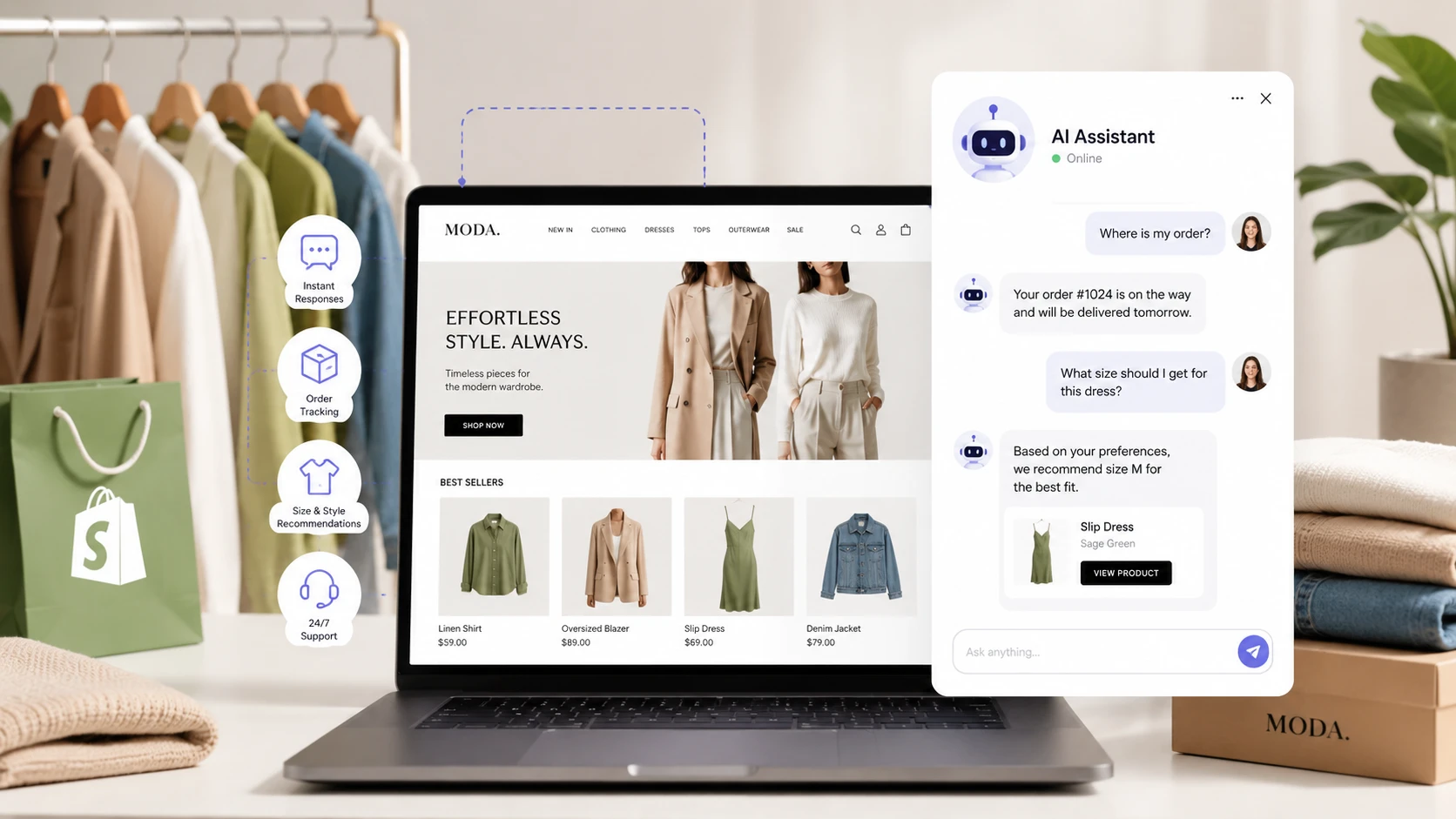
    Quick Answer: An AI agent for ecommerce is an autonomous system that can answer customer questions, recommend products, support returns, check order details, and guide shoppers through buying decisions without constant human oversight. For Shopify clothing stores, the real value is not just “having a chatbot,” but building a smarter customer support and sales layer that works across the full shopping journey.

    Picture this: it is 2 AM, and someone in Tokyo is searching your store for the perfect birthday gift. At the same time, a customer in Berlin needs help processing a return, while someone in Chicago cannot decide between two product variants. Five years ago, you would need a global support team working around the clock. Today, a properly configured AI agent for ecommerce can handle all three conversations at once — and in many cases, do it faster than a tired support team after their fourth coffee.

    The shift happening right now is not just about chatbots getting smarter. We are watching ecommerce support move from simple “helpful assistant” tools into systems that can actually run meaningful parts of the customer experience: answering questions, qualifying needs, recommending products, reducing abandoned carts, and escalating complex cases to humans only when needed.

    For Shopify clothing stores, this matters even more. Fashion ecommerce has a lot of repetitive but important questions: sizing, fabric, shipping, returns, outfit matching, product availability, and “which one should I choose?” If those questions are not answered quickly, shoppers leave.

    That is where AI agents become useful.

    If you are building a more advanced ecommerce operation, this type of automation can also connect naturally with broader AI services, store automation, and custom software development workflows.

    What Is an AI Agent for Ecommerce?

    Let’s cut through the marketing noise for a second.

    An AI agent for ecommerce is not just a pop-up chat window that says “How can I help you today?” and then fails to understand a simple question. A real AI agent can use store data, product information, customer context, order status, and business rules to take useful actions or guide a customer toward the next best step.

    Traditional ecommerce chatbots usually follow fixed scripts. They wait for a trigger, match a keyword, and return a pre-written answer. That can be useful, but it is limited.

    AI agents are different because they can understand context, remember the conversation, make decisions within rules, and adapt their response based on what the customer is actually trying to do.

    Think of the difference like this:

    Traditional automation is a vending machine. Press B4, get chips.

    An AI agent is closer to a trained store employee who remembers customer preferences, notices that someone is browsing winter coats in July, understands that they might be planning a trip, and adjusts the recommendation accordingly.

    Why Shopify Clothing Stores Are a Strong Use Case

    Shopify clothing stores are one of the clearest use cases for ecommerce AI agents because customers usually need help before they buy.

    A shopper might like a product but still hesitate because of size, fit, delivery time, return rules, or uncertainty about whether the item matches something they already own. These small doubts often become abandoned carts.

    The problem is not always product quality. Sometimes the problem is silence.

    A customer asks a question. Nobody answers quickly. They leave.

    An AI agent can reduce that gap by giving immediate, useful guidance at the moment the shopper is still interested.

    For clothing stores, this can include:

    • Size and fit guidance: Helping shoppers choose the right size based on product notes, previous purchases, or store rules.
    • Product recommendations: Suggesting similar items, matching accessories, or better alternatives when something is out of stock.
    • Return and exchange support: Explaining return rules, starting return flows, or guiding customers to the correct next step.
    • Order tracking: Checking order status and giving customers direct updates instead of sending them to a generic help page.
    • Cart recovery support: Answering last-minute doubts before the customer abandons checkout.

    This is why an AI agent for ecommerce is not just a support tool. It can become part of the sales system.

    The Core Capabilities of a Real AI Agent for Ecommerce

    Not every chatbot should be called an AI agent. The label only makes sense when the system can do more than respond with canned answers.

    A useful ecommerce AI agent usually has four core capabilities.

    1. Autonomous Decision-Making

    The agent should not need a human to approve every basic action. It should be able to answer common questions, suggest products, provide policy information, and guide routine processes on its own.

    That does not mean it should have unlimited control. It still needs boundaries. For example, it may be allowed to explain a return process, but not approve unusual refunds without human review.

    Good automation gives the agent enough freedom to be useful without letting it create business risk.

    2. Contextual Understanding

    A real AI agent should understand the customer’s situation, not just the words in one message.

    If someone asks, “Will this fit me?” while viewing a specific jacket, the agent should know which product they are looking at. If someone asks, “Can I return it?” after checking the size guide, the agent should understand the concern is probably about fit risk.

    This context is what makes the experience feel useful rather than robotic.

    3. Multi-Channel Continuity

    Customers do not always stay in one channel. They may start on live chat, continue through email, then come back later from a phone or desktop browser.

    A stronger AI agent setup can maintain context across channels, or at least make sure the handoff does not feel broken.

    That matters because customers hate repeating themselves. If they already explained the problem once, the system should not treat them like a stranger every time.

    4. Goal-Oriented Behavior

    A normal chatbot is designed to “reply.” An AI agent should be designed to achieve outcomes.

    In ecommerce, those outcomes might include:

    • Answering a question clearly.
    • Helping the customer choose the right product.
    • Reducing return risk.
    • Recovering an abandoned cart.
    • Escalating complex problems to a human quickly.

    The goal is not to automate for the sake of automation. The goal is to make the customer journey easier and the store operation more efficient.

    How an AI Agent Works Inside an Ecommerce Store

    Let’s make this practical.

    When a customer lands on your Shopify store, a properly configured AI agent can start using context before the customer even asks a question. It may consider the page being viewed, product category, cart status, browsing behavior, and previous interactions if available.

    The agent does not need to interrupt every visitor. In fact, aggressive pop-ups usually hurt the experience. A better implementation waits for useful moments: hesitation, repeated product views, cart inactivity, or direct customer questions.

    The Customer Support Automation Layer

    This is where most businesses start, and for good reason.

    AI customer support for ecommerce can handle a large percentage of routine inquiries when the system is connected to the right data sources.

    For example, when someone asks, “Where is my order?” the agent should not simply send a generic tracking page. It should check the customer’s order, identify the shipping status, and provide a clear answer.

    When someone asks about returns, the agent should explain the policy, guide the customer through the process, and hand off to a human if the case is unusual.

    This layer can reduce pressure on support teams while improving response speed for customers.

    The Product Discovery and Sales Layer

    Support is only one part of the value.

    An ecommerce AI agent can also help shoppers discover the right products. This is especially useful in clothing, accessories, beauty, electronics, and any category where customers compare options before buying.

    Instead of showing generic recommendations, the agent can ask a few simple questions and narrow the options:

    • What occasion are you buying for?
    • Do you prefer a loose or fitted style?
    • What size do you usually wear?
    • Are you looking for something casual, formal, or seasonal?

    This feels closer to assisted shopping than standard ecommerce filtering.

    For stores that want to go further, AI can also connect with tools like virtual try-on, product matching, and personalized shopping flows. This is where AI virtual try-on software becomes relevant for clothing brands that want a more visual buying experience.

    The Retention and Post-Purchase Layer

    A strong AI agent does not stop after checkout.

    Post-purchase support is one of the biggest opportunities in ecommerce automation. The agent can help with tracking, delivery questions, return instructions, review requests, reorder reminders, and product care guidance.

    This is not always glamorous, but it has a direct impact on customer satisfaction.

    A shopper who gets quick help after buying is more likely to trust the store again.

    What AI Agents Can Automate in a Shopify Clothing Store

    For a Shopify clothing store, the most practical use cases are usually simple, repetitive, and high-volume.

    Here are the areas where an AI agent can make a visible difference.

    Product Questions

    Customers often ask about fabric, fit, measurements, colors, washing instructions, availability, or whether an item matches another product.

    If your product data is organized properly, the AI agent can answer these questions quickly without waiting for a human.

    This is one of the easiest areas to automate because the answers usually already exist somewhere in your product descriptions, size guides, policies, or internal notes.

    Size Guidance

    Sizing is one of the biggest friction points in fashion ecommerce.

    An AI agent can guide customers through size selection by asking structured questions and referencing your size chart. It can also explain whether an item runs small, large, fitted, oversized, or true to size if that information exists in your store data.

    This does not eliminate returns completely, but it can reduce avoidable mistakes.

    Order Tracking

    Customers asking “Where is my order?” are not trying to have a conversation. They want a fast answer.

    An AI agent connected to order and shipping data can provide that answer instantly. This saves time for both the customer and the support team.

    Returns and Exchanges

    Returns are repetitive, but they must be handled carefully.

    The agent can explain the return window, check eligibility, guide the customer through the steps, and collect the required information. For unusual cases, it can escalate to a human with the context already prepared.

    Abandoned Cart Recovery

    Sometimes a shopper abandons a cart because of a question that was never answered.

    An AI agent can help before that happens. If a customer is stuck on a product page or checkout step, the agent can offer specific help instead of generic discount pop-ups.

    For example:

    • “Need help choosing the right size?”
    • “Want to compare this with a similar item?”
    • “Looking for delivery information before checkout?”

    This is more useful than shouting “10% off” at every visitor.

    Common Myths About AI Agents for Ecommerce

    Let’s address a few myths that still create confusion.

    Myth 1: AI Agents Will Replace All Human Support Staff

    No. At least, not in a healthy setup.

    What usually happens is that the support team stops answering the same basic questions all day and starts handling the cases that actually need human judgment.

    The agent handles volume. Humans handle nuance.

    That means your best support people can focus on difficult customers, sensitive cases, high-value orders, and improving the customer experience instead of repeating “Here is our return policy” for the hundredth time.

    Myth 2: You Can Set It and Forget It

    Also no.

    An AI agent for ecommerce needs training, monitoring, and refinement. It is closer to having a smart assistant that learns quickly but still needs guidance on your policies, tone, product logic, and escalation rules.

    You will still need to review edge cases, improve product data, update policies, and adjust the agent’s behavior based on real conversations.

    It is less work than scaling a large support team, but it is not zero work.

    Myth 3: Only Big Brands Can Afford This

    This used to be more true than it is now.

    Small and mid-sized ecommerce stores are often strong candidates because they feel the pain of support volume earlier. They may not have the budget for a large customer service team, but they still need fast answers and consistent support.

    The key is choosing the right implementation level. Not every store needs a complex custom agent on day one.

    The Right Way to Implement an AI Agent

    The safest approach is not to automate everything at once.

    Smart stores start with one controlled use case, prove value, and then expand.

    Phase 1: After-Hours Support

    A simple first step is to deploy the AI agent outside business hours.

    Your human team continues handling normal daytime support, while the agent covers nights, weekends, and time zones your team cannot reach easily.

    This gives you a lower-risk way to test quality, train the system, and discover common gaps.

    Phase 2: Tier-1 Questions During Business Hours

    Once the agent performs well, it can start handling simple questions during normal hours too.

    These might include:

    • Order tracking.
    • Return policy questions.
    • Basic product information.
    • Size guide explanations.
    • Shipping time questions.

    Humans should remain available for escalations.

    Phase 3: Sales Assistance and Personalization

    After support automation is stable, the next step is sales assistance.

    This is where the agent starts helping shoppers choose products, compare options, and receive better recommendations.

    At this stage, the agent becomes part of the revenue system, not just the support system.

    Integration Requirements You Should Check First

    Before choosing any AI agent platform, check whether it can actually connect to the systems your store already uses.

    This is where many ecommerce AI projects succeed or fail.

    A nice demo is not enough. The agent needs reliable access to the right data, and it needs clear rules for what it can and cannot do.

    Essential Integrations

    At minimum, an AI agent for ecommerce usually needs access to:

    • Your ecommerce platform: Shopify, WooCommerce, or a custom store backend.
    • Product catalog: Product titles, descriptions, variants, images, stock status, and pricing.
    • Order data: Order status, customer details, payment status, and fulfillment updates.
    • Shipping tools: Tracking numbers, carrier updates, delivery estimates, and failed delivery notes.
    • Store policies: Returns, refunds, shipping rules, exchanges, warranty, and support terms.

    Without these connections, the agent becomes a smarter FAQ tool. With them, it becomes a real operational assistant.

    Advanced Integrations

    More advanced stores may also connect the agent to:

    • CRM systems.
    • Email marketing tools.
    • Loyalty programs.
    • Inventory management systems.
    • Analytics platforms.
    • ERP or custom internal systems.

    This is where custom software development may become necessary, especially if your store uses custom workflows that standard apps cannot handle cleanly.

    How to Choose the Right AI Agent for Ecommerce

    The market is full of tools calling themselves AI agents, AI chatbots, AI assistants, or customer support automation platforms. The names are less important than what the system can actually do.

    Here are the criteria that matter.

    1. Can It Take Real Actions?

    There is a big difference between a tool that says, “You can return your item from the returns page,” and a tool that can actually start the return process.

    The more actions the agent can safely perform, the more valuable it becomes.

    Useful actions might include:

    • Checking order status.
    • Starting a return request.
    • Recommending available products.
    • Collecting customer details before escalation.
    • Creating a support ticket.
    • Sending a product or policy link.

    Start with safe actions first, then expand gradually.

    2. How Does It Learn Your Store?

    Some AI tools require heavy manual setup. Others can learn from your product catalog, help center, policy pages, previous support conversations, and internal documents.

    Both approaches can work, but you need to know what is required before you start.

    For a clothing store, the agent should understand:

    • Product categories.
    • Size guides.
    • Fabric and material details.
    • Shipping rules.
    • Return policy details.
    • Brand tone and style.

    Poor training creates vague answers. Good training creates a useful assistant.

    3. Does It Escalate Properly?

    Escalation is one of the most important parts of ecommerce AI support.

    A bad AI agent keeps guessing when it should stop. A good AI agent knows when to bring in a human.

    Escalation should happen when:

    • The customer is angry or frustrated.
    • The case involves payment problems.
    • The agent is not confident.
    • The request is outside the store’s policy.
    • The customer asks for a human.
    • The order value or risk level is high.

    The handoff should include the conversation history so the human support agent does not need to ask the customer to repeat everything.

    4. Can You Control the Brand Voice?

    Your AI agent should not sound like a generic corporate robot.

    If your brand is playful, the agent should feel friendly and light. If your brand is premium, it should feel polished and calm. If your audience is technical, it can be more direct and detailed.

    Brand voice matters because the AI agent becomes part of the customer experience. Customers may not analyze the tone consciously, but they will feel when something is off.

    Risks and Limitations You Should Not Ignore

    AI agents can be powerful, but they are not magic. There are real risks, and pretending they do not exist is how bad implementations happen.

    Incorrect Answers

    AI systems can sometimes generate confident answers that are wrong. In ecommerce, that can mean incorrect product details, wrong delivery expectations, or policy confusion.

    The solution is to ground the agent in verified store data, restrict risky actions, and create clear escalation rules.

    Weak Product Data

    If your product data is messy, the AI agent will struggle.

    For example, if size charts are inconsistent, product descriptions are thin, and return rules are unclear, the agent has weak material to work with.

    Before blaming the AI, check the data.

    Over-Automation

    Not every customer interaction should be automated.

    Some situations need empathy, negotiation, or human judgment. If the agent blocks customers from reaching a human, it can damage trust quickly.

    The goal is not to hide your support team. The goal is to let the AI handle repetitive work while humans handle the cases that deserve human attention.

    Privacy and Compliance

    An ecommerce AI agent may process customer names, order information, messages, browsing behavior, and purchase history.

    That means privacy matters.

    You need to understand how the platform stores data, whether it uses customer conversations for training, what security controls exist, and whether it supports relevant privacy requirements in your market.

    For broader context on ecommerce AI use cases, Shopify’s guide to AI in ecommerce is a useful industry reference.

    How to Measure Success

    Do not judge an AI agent only by how many messages it sends. That number alone does not mean much.

    Measure whether it improves the business.

    Support Metrics

    Start with operational metrics:

    • Response time: How quickly customers get a useful answer.
    • Resolution rate: How many conversations are solved without human intervention.
    • Escalation rate: How often the agent needs a human.
    • Customer satisfaction: Whether customers are happy with the answer.
    • Support workload: Whether repetitive tickets decrease.

    These metrics tell you if the agent is actually helping your support process.

    Sales Metrics

    For ecommerce, support is only part of the picture.

    You should also look at:

    • Conversion rate.
    • Cart abandonment rate.
    • Average order value.
    • Repeat purchase rate.
    • Revenue from assisted sessions.

    A good AI agent can improve sales by answering objections at the right moment, helping customers choose, and making the buying process feel easier.

    When an AI Agent Is Worth It — and When It Is Not

    An AI agent for ecommerce is not necessary for every store.

    It is usually worth exploring if:

    • You receive repeated customer questions every week.
    • Your team spends too much time answering basic support tickets.
    • You sell products that require explanation or comparison.
    • Your store serves customers in different time zones.
    • You lose sales because shoppers do not get quick answers.
    • You are scaling and support costs are growing with revenue.

    You may want to wait if:

    • Your store has very little traffic.
    • Your product data is incomplete or messy.
    • Your policies change constantly.
    • You do not have anyone who can monitor and improve the system.

    The technology is no longer experimental, but it still needs a responsible setup.

    Final Thoughts

    An AI agent for ecommerce is not just a trend or a fancy chatbot. When implemented properly, it becomes a practical layer between your customers, products, policies, and support team.

    For Shopify clothing stores, the opportunity is clear. Customers need help with size, fit, availability, shipping, returns, and product choices. If those questions are answered quickly and naturally, the store has a better chance of converting visitors into buyers.

    The right approach is not to automate everything overnight. Start with the repetitive support questions. Connect the agent to reliable store data. Set clear escalation rules. Then expand into product recommendations, cart recovery, and post-purchase automation.

    Done well, an AI agent does not replace the human side of ecommerce. It protects it by removing repetitive work and giving people more time for the conversations that actually need them.

    If you want to build a more advanced customer support or ecommerce automation system, JustOnePrompt can help connect AI agents with Shopify workflows, store data, and custom automation logic through AI services and store automation.

    Frequently Asked Questions

    What is an AI agent for ecommerce?

    An AI agent for ecommerce is an autonomous system that helps customers across the buying journey. It can answer questions, recommend products, support returns, check order information, and escalate complex issues to humans when needed.

    How is an AI agent different from a normal ecommerce chatbot?

    A normal chatbot usually follows fixed scripts or simple keyword rules. An AI agent can understand context, use store data, make decisions within defined rules, and guide customers toward useful outcomes.

    Do Shopify clothing stores really need an AI agent?

    Not every store needs one immediately, but Shopify clothing stores with repeated questions about sizing, returns, shipping, product recommendations, or order tracking can benefit from an AI agent because it reduces response time and helps customers make buying decisions.

    Can an AI agent increase ecommerce sales?

    Yes, when implemented well. An AI agent can increase sales by answering product questions quickly, reducing abandoned carts, recommending relevant products, and helping customers feel more confident before checkout.

    Will an AI agent replace human support?

    Usually no. The best setup uses AI agents for repetitive questions and routine workflows, while human support handles complex, emotional, sensitive, or high-value cases.

    How long does it take to implement an AI agent in a Shopify store?

    A basic implementation can take a few days if the store uses standard Shopify apps and clear policies. A more advanced setup with custom workflows, integrations, and brand-specific training may take several weeks.

    What should I prepare before using an ecommerce AI agent?

    You should prepare clear product data, size guides, return policies, shipping rules, support FAQs, escalation rules, and examples of your brand voice. The better your data, the better the AI agent will perform.

  • Ecommerce Cloud Computing: Do Shopify Automation Tools Need VPS Hosting?

    Ecommerce Cloud Computing: Do Shopify Automation Tools Need VPS Hosting?

    “`html

    Quick Answer: Ecommerce cloud computing delivers scalable infrastructure, platforms, and software over the internet, enabling online retailers to handle traffic spikes, reduce upfront costs, and deploy new features quickly without managing physical servers.

    Why Your Online Store Shouldn’t Live in a Basement Server Room

    Picture this: It’s Black Friday morning, your online store is running on a server tucked in the back office, and suddenly 10,000 shoppers hit “buy now” simultaneously. The server wheezes, the site crawls to a halt, and you’re left frantically refreshing the admin panel while orders evaporate into the ether.

    This nightmare scenario used to be the reality for ecommerce businesses before cloud computing arrived. Today, the intersection of online retail and cloud technology has fundamentally reshaped how digital storefronts operate. No more scrambling to buy extra servers every holiday season or praying your infrastructure can handle a viral product launch.

    The shift toward ecommerce cloud computing isn’t just a tech trend—it’s become the operational backbone that separates thriving online retailers from those stuck troubleshooting hardware at 3 AM. Let’s break down exactly how this transformation happened and what it means for anyone selling stuff online.

    What Ecommerce Cloud Computing Actually Means (No Jargon, Promise)

    At its core, cloud computing for ecommerce means renting computing power, storage, and services from massive data centers instead of owning and maintaining your own equipment. Think of it like the difference between owning a car (buying servers) versus using Uber (renting cloud resources)—you get where you need to go without the maintenance headaches.

    Three main service models power most online stores:

    • IaaS (Infrastructure as a Service): Virtual servers and storage you control. You pick the operating system, install your ecommerce platform, and manage everything except the physical hardware.
    • PaaS (Platform as a Service): Pre-configured development environments where you deploy your applications without worrying about servers, security patches, or scaling configurations.
    • SaaS (Software as a Service): Complete ecommerce platforms accessible through a browser—just add products, customize your storefront, and start selling.

    The model you choose depends on how much control you need versus how much infrastructure management you wanna handle yourself. A small boutique might thrive with SaaS simplicity, while a high-traffic retailer with custom requirements might need the flexibility of IaaS or VPS hosting for ecommerce with automated workflows.

    The Real Players Behind Your Favorite Online Stores

    Amazon Web Services (AWS) dominates this space, which makes sense given Amazon basically invented modern cloud infrastructure while solving their own ecommerce challenges. Microsoft Azure and Google Cloud Platform also provide robust ecommerce solutions, each with unique strengths.

    Smaller specialized providers focus exclusively on ecommerce needs, offering pre-optimized environments for platforms like Magento, WooCommerce, or Shopify Plus. These niche players understand retail-specific challenges like PCI compliance, seasonal traffic patterns, and integration with payment processors.

    Why Cloud Computing Became Ecommerce’s Best Friend

    Here’s the simple version: cloud computing solved three massive problems that used to keep ecommerce operators awake at night—scalability nightmares, reliability concerns, and astronomical upfront costs.

    Elastic Scalability (AKA Your Site Won’t Crash During Sales)

    Traditional hosting meant guessing your maximum traffic six months in advance and paying for that capacity whether you used it or not. Cloud infrastructure automatically provisions additional resources when traffic surges, then scales back down when things quiet down.

    During Cyber Monday, your site might need 50 servers to handle demand. On a random Tuesday in February, maybe five servers suffice. With cloud computing, you pay for what you actually use rather than maintaining peak capacity year-round sitting idle.

    This elasticity extends beyond just web servers. Database performance, content delivery networks, image processing, search functionality—every component scales independently based on real-time demand.

    Reliability Through Redundancy

    Cloud providers distribute your ecommerce platform across multiple servers in different geographic locations. If one server fails (and they do fail), traffic automatically routes to healthy servers without customers noticing anything wrong.

    Compare this to the old model where a single server failure meant your entire store went dark until someone physically fixed the problem. The distributed nature of cloud computing essentially builds insurance against hardware failures directly into teh infrastructure.

    From Capital Expenses to Operating Expenses

    Launching an online store used to require significant upfront investment in servers, networking equipment, backup systems, and climate-controlled server rooms. Cloud computing converts these capital expenses into predictable monthly operational costs.

    For startups and small retailers, this shift is transformative. You can launch with enterprise-grade infrastructure for a few hundred dollars monthly rather than tens of thousands upfront. As revenue grows, infrastructure costs scale proportionally.

    How Cloud Infrastructure Powers Modern Online Shopping

    Let’s pause for a sec and talk about what’s actually happening behind the scenes when someone clicks “Add to Cart” on a cloud-hosted ecommerce site.

    The customer’s request hits a load balancer that distributes incoming traffic across multiple web servers. These servers pull product data from cloud databases, retrieve product images from object storage, and check inventory levels in real-time. Payment processing happens through encrypted connections to payment gateways, and order confirmations trigger automated workflows across fulfillment systems.

    All of this happens in milliseconds, orchestrated across dozens or hundreds of servers that might be physically located across multiple continents. The cloud provider handles the complexity of coordinating these distributed systems.

    The Customer Experience Advantage

    Page load speed directly impacts conversion rates. Cloud providers operate massive content delivery networks (CDNs) that cache your product images, stylesheets, and static content on servers close to your customers. A shopper in Tokyo loads images from a Tokyo data center, while someone in London pulls from European servers.

    Personalization engines running on cloud infrastructure analyze browsing behavior, purchase history, and preferences in real-time to customize product recommendations. These AI-powered systems require substantial computing power that would be impractical for individual retailers to maintain on-premises.

    Omnichannel experiences—where customers seamlessly move between mobile apps, websites, and physical stores—rely on cloud infrastructure to synchronize inventory, preferences, and shopping carts across all touchpoints. For more insights on managing complex cloud infrastructures, explore this detailed overview of ecommerce cloud fundamentals.

    Common Misconceptions About Cloud-Based Ecommerce

    Despite widespread adoption, several myths persist about cloud computing for online retail. Let’s clear up the most common ones.

    Myth: Cloud Hosting Is Less Secure Than On-Premises

    In plain English: major cloud providers invest billions in security infrastructure that individual retailers could never match. They employ dedicated security teams, maintain compliance certifications (PCI DSS, SOC 2, ISO 27001), and implement advanced threat detection systems.

    The security concern typically stems from not understanding the shared responsibility model. Cloud providers secure the infrastructure; retailers remain responsible for securing their applications, data access controls, and user credentials.

    Myth: You Lose Control of Your Data

    Cloud providers store your data, but you retain full ownership and control. You can export your data anytime, control who accesses it, and choose which geographic regions store it for compliance with data residency regulations.

    Most cloud contracts explicitly state that your data belongs to you, and providers cannot access it without your permission except in specific legal circumstances.

    Myth: Cloud Computing Is Always Cheaper

    For most ecommerce businesses, cloud infrastructure reduces total cost of ownership significantly. However, extremely large retailers with predictable, consistent traffic patterns might find dedicated infrastructure more cost-effective.

    The financial advantage of cloud computing comes from eliminating waste—paying only for resources you use, avoiding over-provisioning, and eliminating the hidden costs of maintaining infrastructure (power, cooling, physical security, hardware replacement).

    Real-World Implementation: How Retailers Actually Use Ecommerce Cloud Computing

    Theory is nice, but let’s talk about how online retailers actually leverage cloud infrastructure in their daily operations.

    Startup Scenario: Launch Fast, Iterate Faster

    A new fashion retailer launches using a SaaS ecommerce platform hosted entirely in the cloud. Within days, they have a functioning online store without writing a single line of server configuration code. As the brand gains traction, they add cloud-based inventory management, email marketing automation, and customer service tools—all integrating seamlessly through APIs.

    When an Instagram influencer unexpectedly features their products, traffic spikes 50x overnight. The cloud infrastructure automatically scales to handle demand without the founders doing anything. No frantic calls to hosting providers, no emergency server purchases.

    Mid-Size Retailer: Omnichannel Integration

    An established retailer with physical stores and an online presence uses PaaS solutions to build custom applications connecting all sales channels. Cloud-based inventory systems provide real-time stock visibility across warehouses, stores, and online listings.

    Customers can check if products are available at nearby stores through the website, buy online and pick up in-store, or return online purchases at physical locations. All these capabilities rely on cloud infrastructure synchronizing data across systems in real-time.

    Enterprise Example: Global Expansion Without Infrastructure Investment

    A large international retailer expands into new markets by deploying regional instances of their ecommerce platform in cloud data centers near target customers. This approach reduces latency, ensures compliance with local data regulations, and provides better customer experiences without building physical infrastructure in each country.

    During regional holidays or events, they allocate additional computing resources to specific geographic deployments, then reallocate those resources to different regions as demand shifts. This global resource optimization would be impossible with traditional infrastructure.

    Choosing Your Cloud Strategy: Practical Considerations

    Selecting the right cloud approach depends on several factors specific to your ecommerce operation. Technical expertise available in-house plays a major role—IaaS offers maximum flexibility but requires skilled DevOps personnel to manage effectively.

    Budget considerations extend beyond monthly hosting costs. Calculate the total cost including development time, maintenance, security compliance, and potential downtime. Sometimes paying more for managed services saves money compared to hiring full-time infrastructure specialists.

    Compliance requirements might dictate certain cloud configurations. Healthcare products, financial services, or businesses operating in heavily regulated industries need providers with specific certifications and the ability to implement required security controls.

    What’s Next: The Future of Cloud-Powered Ecommerce

    The integration of ecommerce cloud computing continues evolving rapidly. Emerging trends include edge computing bringing processing power even closer to customers, AI-powered personalization engines that understand shopping intent, and serverless architectures that eliminate server management entirely.

    Voice commerce, augmented reality product visualization, and real-time video shopping experiences all depend on cloud infrastructure providing the computing power and global distribution required for these bandwidth-intensive features.

    For retailers just starting their cloud journey, the path forward is clearer than ever: start with managed solutions that handle infrastructure complexity, then gradually adopt more sophisticated cloud services as your team’s capabilities and business requirements grow. The barrier to entry has never been lower, and the competitive advantages have never been more significant.

    If you’re ready to dive deeper into technical implementation, consider exploring strategies for automating deployment processes and managing multi-cloud environments efficiently.

    FAQ: Ecommerce Cloud Computing Essentials

    What is ecommerce cloud computing?

    Ecommerce cloud computing is the delivery of online retail infrastructure, platforms, and software through internet-based services rather than physical hardware owned by the retailer. It enables scalable, flexible operations without managing servers directly.

    How does VPS hosting for ecommerce differ from traditional cloud services?

    VPS hosting provides dedicated virtual server resources with more control than shared hosting but less scalability than full cloud platforms. It offers a middle ground between affordability and customization for growing ecommerce businesses.

    What are the main cost benefits of cloud computing for online stores?

    Cloud computing eliminates upfront hardware investments, converts fixed infrastructure costs to variable expenses based on usage, and reduces staffing needs for server maintenance. You pay only for resources consumed during actual traffic and processing demands.

    Is cloud hosting secure enough for storing customer payment information?

    Major cloud providers maintain PCI DSS compliance and implement enterprise-grade security measures exceeding what most individual retailers could achieve. Security responsibility is shared between the provider (infrastructure) and retailer (application and data access controls).

    Can I migrate my existing ecommerce site to the cloud?

    Yes, most ecommerce platforms can migrate to cloud infrastructure through phased approaches that minimize downtime. The complexity depends on your current architecture, integrations, and whether you’re moving to IaaS, PaaS, or SaaS solutions.

    “`

  • Generative AI in E Commerce: How Clothing Brands Use It to Scale Faster

    Generative AI in E-Commerce: How Clothing Brands Use It to Scale Faster

    Quick Answer: Generative AI in e-commerce helps clothing brands create product descriptions, campaign content, personalized shopping experiences, virtual try-on previews, styling assistance, and customer support at scale. The goal is not to replace the creative team, but to help the brand launch collections faster, reduce repetitive work, and give shoppers more confidence before they buy.

    Picture this: You’re scrolling through a clothing store at 2 a.m. (no judgment, we’ve all been there), looking at a jacket that seems almost perfect. The product page explains how it fits, suggests trousers that actually match, answers your oddly specific question about whether the fabric works in warm weather, and lets you preview the look before buying.

    That’s not magic. That’s generative AI in e-commerce doing its thing.

    For clothing brands, the pressure is especially intense. New collections arrive constantly, product catalogs grow fast, trends change without warning, and every item needs photos, descriptions, campaigns, translations, sizing information, emails, social posts, and customer support.

    What used to require weeks of coordination can now be handled faster with AI-assisted workflows. Not fully automated, not blindly published, and definitely not without human review—but faster, more consistently, and at a scale that would exhaust even the most caffeinated marketing team.

    What Is Generative AI in E-Commerce?

    Generative AI refers to artificial intelligence systems that create new content—text, images, conversations, product summaries, campaign ideas, and other outputs—rather than only analyzing existing data.

    In fashion e-commerce, this might mean:

    • Writing product descriptions from verified catalog data
    • Creating variations of email and advertising copy
    • Generating localized content for different markets
    • Powering conversational shopping and styling assistants
    • Producing visual previews and virtual try-on experiences
    • Summarizing reviews about sizing, fabric, or fit

    Think of it as the difference between a vending machine and a personal stylist. Traditional automation follows predefined rules. Generative AI can use context—such as product details, brand voice, customer questions, and shopping intent—to create a more relevant response.

    That doesn’t mean the AI magically understands fashion. It still needs accurate product data, clear instructions, and human oversight. But when those pieces are in place, it becomes a seriously useful assistant.

    The Building Blocks Behind Fashion AI

    Most generative AI applications rely on large language models, image-generation systems, or multimodal models that can work with both text and visuals.

    For a clothing brand, the quality of the output depends heavily on the information provided to the system:

    • Product data: fabric, cut, size range, color, care instructions, and availability
    • Brand guidelines: tone, vocabulary, positioning, and words the brand avoids
    • Visual assets: approved product images, model photography, and campaign references
    • Customer context: browsing behavior, previous purchases, questions, and preferences where appropriate
    • Business rules: return policies, shipping information, promotions, and regional restrictions

    Here’s what makes generative AI different from earlier ecommerce automation:

    • Creation vs. prediction: It can produce a new description, answer, image, or campaign variation
    • Context awareness: It can adapt the output to a product category, customer question, or brand tone
    • Scalability: The same workflow can assist with ten products or ten thousand
    • Multichannel use: One approved source can support product pages, emails, ads, social media, and customer service

    Why Clothing Brands Use Generative AI in E-Commerce to Scale Faster

    Let’s pause for a second and talk about the elephant in the virtual fitting room: why should a clothing brand care about this particular technology when a new “game-changing” AI tool appears every other week?

    The answer isn’t simply “because AI is popular.”

    Clothing brands face a combination of problems that generative AI is unusually well suited to help with: large product catalogs, fast collection cycles, visual buying decisions, sizing uncertainty, content bottlenecks, international markets, and repetitive customer questions.

    Shopify’s current overview of generative AI use cases in ecommerce highlights applications across product content, marketing channels, customer support, and operational analysis. For fashion stores, those areas are closely connected.

    A new clothing collection doesn’t just need products. It needs a complete content system around those products.

    Content Production Without the Burnout

    I once heard an ecommerce manager describe launching a new collection as “copying the same chaos into a different spreadsheet.” Honestly, that feels accurate.

    Every new item may require:

    • A detailed product description
    • A shorter mobile-friendly summary
    • Fabric and care information
    • SEO title and meta description
    • Email campaign copy
    • Social media captions
    • Ad variations
    • Translations for different markets

    Multiply that by hundreds or thousands of SKUs, and suddenly the creative team isn’t being creative anymore. They’re moving text from one box to another while quietly questioning every career decision they’ve ever made.

    Generative AI can produce first drafts and channel-specific variations from approved product information. The team still reviews the output, but it no longer has to begin every description with a blank page.

    Personalization at a Scale Humans Cannot Manually Manage

    Every retailer wants shoppers to feel understood. The problem is that manually personalizing the experience for thousands of visitors is impossible.

    Generative AI can help adapt the shopping journey by:

    • Emphasizing comfort, sustainability, versatility, or styling depending on customer intent
    • Creating personalized email copy around relevant product categories
    • Answering questions about styling combinations
    • Suggesting alternatives when a size or color is unavailable
    • Explaining why a recommended product may suit the shopper’s needs

    The important word here is relevant, not creepy.

    Personalization should help the shopper make a decision. It should not feel like the store has been watching through the window since Tuesday.

    Faster Expansion Into New Markets

    International fashion ecommerce involves more than translating “summer dress” into another language.

    Different markets use different sizing terms, seasonal language, styling references, cultural expectations, and purchasing habits. A direct translation can be technically correct and still sound like it was written by a very confused instruction manual.

    Generative AI can help clothing brands create localized versions of:

    • Product pages
    • Category introductions
    • Advertising campaigns
    • Email flows
    • Customer service responses
    • Size and care explanations

    Human reviewers who understand the target market are still essential, but AI can dramatically reduce the time needed to prepare the first version.

    Practical Generative AI Use Cases for Clothing Brands

    The most useful applications aren’t the ones that look impressive during a presentation. They’re the ones that solve a repetitive problem every single week.

    1. Product Description Generation

    This is usually the easiest place to start.

    A brand can connect verified catalog data to an AI workflow that produces descriptions using a consistent structure and tone.

    For example, the system might receive:

    • Product name
    • Material and fabric composition
    • Fit and silhouette
    • Available sizes and colors
    • Care instructions
    • Approved selling points

    It can then create:

    • A full product description
    • A short summary
    • Key feature bullets
    • SEO metadata
    • Email and social media variations

    The AI must never invent details that aren’t in the catalog. If the fabric isn’t wrinkle-resistant, the system shouldn’t confidently announce that it survives being folded inside a suitcase for three weeks.

    A good workflow uses structured product data, clear prompts, and an approval step before publishing.

    2. Campaign Content for New Collections

    Fashion campaigns need a lot of variations.

    The launch concept may stay the same, but the copy changes across:

    • Homepage banners
    • Collection pages
    • Email subject lines
    • Paid advertisements
    • Instagram captions
    • Short-form video scripts
    • Influencer briefing documents

    Generative AI can take an approved campaign direction and turn it into channel-specific drafts without losing the main message.

    This doesn’t replace the creative director. It helps the creative director avoid spending Thursday afternoon rewriting the same sentence in twelve slightly different ways.

    3. AI Virtual Try-On and Product Visualization

    One of the biggest challenges in fashion ecommerce is simple: customers cannot physically try the product before buying.

    Generative and visual AI systems can help shoppers preview how clothing may look using uploaded photos, model variations, or interactive visual experiences.

    Google’s shopping tools, for example, have expanded virtual try-on features that allow shoppers to upload a photo and preview supported clothing items. This shows how quickly virtual visualization is moving from experimental technology toward a normal part of online shopping.

    You can review Google’s explanation of its AI-powered virtual try-on shopping experience for a practical example.

    For clothing brands, virtual try-on can:

    • Make product pages more interactive
    • Help shoppers visualize complete outfits
    • Reduce hesitation before adding an item to the cart
    • Differentiate the store from competitors using static product images
    • Connect the visual preview directly with the purchase journey

    The result is still a visual approximation, not a guaranteed prediction of physical fit. That distinction should always be clear to the customer.

    JustOnePrompt also develops AI virtual try-on software for fashion stores that can be planned as a Shopify app, WooCommerce plugin, or independent SaaS product.

    4. Size and Fit Guidance

    Sizing questions create friction, returns, support tickets, and abandoned purchases.

    AI can organize and summarize information from:

    • Size charts
    • Product measurements
    • Verified customer reviews
    • Return reasons
    • Fit notes from the merchandising team

    Amazon Fashion has described using AI and large language models to improve size charts, summarize relevant fit feedback, and provide personalized fit insights.

    Its overview of AI-powered fashion fit features demonstrates how language models can make complicated sizing information easier for customers to understand.

    A clothing brand could use a similar principle to answer questions such as:

    • Does this item run small or large?
    • Is the fabric stretchy?
    • How does the fit compare with another product?
    • Which measurement should the customer prioritize?

    The system should explain available information clearly. It should not pretend it can guarantee fit when the underlying data does not support that promise.

    5. Conversational Styling Assistants

    Remember those old chatbots that responded to every question with “Please select one of the following options”?

    Yeah. Nobody misses them.

    A generative AI shopping assistant can have a more natural conversation with the customer. It can ask what type of event they’re shopping for, understand color or style preferences, recommend matching items, and suggest alternatives when something is unavailable.

    A useful styling assistant might help with questions such as:

    • What jacket works with these trousers?
    • Can you build a complete outfit for a casual wedding?
    • Which colors match this dress?
    • Do you have a similar item with longer sleeves?
    • What can I wear with these shoes?

    The system becomes even more useful when it is connected to live inventory. There’s no point recommending the perfect outfit if every item has been out of stock since last winter.

    6. Personalized Email and Post-Purchase Content

    Generative AI can create email variations based on customer behavior, product category, location, or purchase stage.

    Examples include:

    • Welcome emails adapted to the customer’s interests
    • Back-in-stock notifications with relevant alternatives
    • Abandoned-cart messages that reference the selected style naturally
    • Post-purchase care instructions
    • Cross-sell suggestions based on the purchased outfit
    • Review requests written in the brand’s tone

    This works especially well when AI content is connected with store automation. The workflow detects an event, checks the relevant data, creates or selects suitable content, and sends it through the correct channel.

    For the operational side, see how store automation services can connect orders, alerts, customer follow-up, email, WhatsApp, and internal tools.

    7. Smarter Upselling Without the Pushy Salesperson Energy

    Upselling in fashion should feel like styling help, not an ambush.

    Instead of showing random expensive products, generative AI can explain why an additional item complements what the shopper already selected.

    For example:

    • A belt that completes the dress
    • A jacket that matches the selected trousers
    • A second color of an item the customer already likes
    • A care product suitable for the fabric
    • A complete outfit built around the main purchase

    The recommendation engine may identify the products, while generative AI creates the explanation around them.

    For a deeper look at this use case, read how generative AI can support ecommerce upsells with smart automation.

    8. Review Summaries and Customer Insight

    Customers rarely want to read 400 reviews to discover whether a shirt runs small.

    Generative AI can summarize recurring themes from verified reviews, such as:

    • Fit and sizing
    • Fabric feel
    • Color accuracy
    • Comfort
    • Durability
    • Styling suggestions from buyers

    These summaries can help shoppers, but they can also help the brand.

    If hundreds of customers mention that a sleeve feels too short, that’s not just customer service information. That’s product development information waving both hands in the air.

    How Generative AI Helps Clothing Brands Scale Without Losing Their Voice

    Here’s the concern many brands have: if everyone uses the same AI tools, won’t every store start sounding exactly the same?

    Yes—if the implementation is lazy.

    Generic prompts produce generic content. If the instruction is simply “write a product description,” the output will probably contain phrases like “elevate your wardrobe” and “perfect for any occasion” until the internet collapses under the weight of its own adjectives.

    A better system includes:

    • Examples of approved brand copy
    • Clear tone and vocabulary rules
    • Words and claims the brand must avoid
    • Different formats for products, emails, ads, and support
    • Rules for fabric, sustainability, fit, and performance claims
    • A human approval process

    The goal is not to make AI sound human in a vague way. The goal is to make the output sound like the specific brand.

    Create One Reliable Source of Product Truth

    Before generating anything, organize the product information.

    If the product management system says one thing, the supplier spreadsheet says another, and the website contains a third version copied in 2022, AI will not fix the confusion. It will simply generate the confusion faster.

    Create a verified product source containing:

    • Official product names
    • Materials and percentages
    • Measurements
    • Size range
    • Care instructions
    • Available colors
    • Approved claims
    • Stock and regional availability

    Generative AI should create content from this source rather than guessing from incomplete information.

    Separate Generation From Publishing

    One of the safest implementation rules is simple: generating content and publishing content should be two different steps.

    A practical workflow might look like this:

    1. The product team enters or imports verified product data
    2. The AI generates the required content formats
    3. A team member reviews claims, tone, and accuracy
    4. The approved version is published to the store
    5. Performance and customer feedback are monitored

    Later, low-risk content may be approved automatically if the rules are reliable. But starting with full automatic publishing is how a brand ends up describing a polyester shirt as “handwoven from ethically sourced moonlight.”

    Common Myths About Generative AI in Fashion Ecommerce

    Myth #1: “It Will Replace the Creative Team”

    Generative AI is good at variations, first drafts, formatting, summarization, and repetitive content production.

    It is much less reliable at defining a distinctive brand identity, understanding cultural nuance without guidance, making strategic creative decisions, or recognizing when an idea is technically correct but emotionally terrible.

    The strongest setup is a creative team using AI as a production assistant—not an empty office with a chatbot wearing the creative director’s badge.

    Myth #2: “It Is Only for Large Fashion Retailers”

    Large retailers have more data and technical resources, but smaller clothing brands often have a clearer advantage: they can test one use case quickly.

    A small Shopify or WooCommerce store might begin with:

    • Product description drafts
    • Email variations
    • Customer question summaries
    • Simple styling assistance
    • A virtual try-on prototype for selected products

    The goal isn’t to build the entire future of fashion commerce by next Tuesday. It’s to solve one costly or repetitive problem, measure the result, and expand carefully.

    Myth #3: “AI Content Can Be Published Without Review”

    Absolutely not.

    Generative AI can invent details, misunderstand product information, exaggerate benefits, or create visuals that do not accurately represent the real item.

    Human review is especially important for:

    • Fabric and material claims
    • Sustainability statements
    • Size and fit guidance
    • Care instructions
    • Health or performance-related claims
    • Generated product imagery

    The technology is powerful. Powerful and unsupervised are not the same thing as useful.

    Risks Clothing Brands Need to Manage

    Inaccurate Product Information

    An attractive description is useless if the product details are wrong.

    AI-generated content must be grounded in verified catalog data. The system should not invent stretch, durability, fit, origin, or sustainability claims.

    Misleading Generated Images

    Generated fashion images can make a product appear different from reality. Colors, patterns, lengths, textures, and small design details may change during generation.

    Brands should clearly distinguish between:

    • Real product photography
    • AI-generated campaign imagery
    • Virtual try-on previews
    • Concept images that do not represent an exact product

    Transparency protects both the customer and the brand.

    Customer Privacy

    Virtual try-on, personalization, and conversational assistants may involve customer photos, preferences, or behavioral data.

    Brands should explain:

    • What information is collected
    • Why it is needed
    • How long it is stored
    • Whether it is shared with another provider
    • How the customer can delete or opt out

    “Trust us, the AI needs it” is not a privacy policy.

    Bias and Limited Representation

    Fashion systems should be tested across different body types, sizes, skin tones, ages, and styling preferences.

    A system trained or tested on a narrow set of examples may provide worse results for customers outside that set. Diverse testing is not an optional final step; it is part of building a usable product.

    A Practical 90-Day Implementation Plan

    You don’t need to rebuild the entire store. Start with one controlled use case.

    Days 1–30: Choose the Problem and Prepare the Data

    • Select one measurable problem
    • Choose a limited product category
    • Clean and verify product information
    • Document the brand voice
    • Define what the AI may and may not claim
    • Set a baseline for time, cost, conversion, or support volume

    A good first problem might be generating drafts for 100 product descriptions or handling common questions for one clothing category.

    Days 31–60: Build and Test the Workflow

    • Create prompt templates or automation steps
    • Generate content using approved data
    • Review accuracy and brand consistency
    • Test with internal users or a small customer segment
    • Record errors instead of pretending they didn’t happen

    This stage is about learning what fails.

    If every description contains the phrase “timeless elegance,” congratulations—you have discovered a prompt problem.

    Days 61–90: Measure and Expand Carefully

    Track metrics connected to the original problem:

    • Time required to prepare product content
    • Number of corrections before publishing
    • Customer engagement with the new experience
    • Conversion rate for tested product pages
    • Support questions about sizing or products
    • Return reasons
    • Use of virtual try-on or styling features

    Expand only after the workflow produces reliable results.

    Scaling a broken workflow doesn’t make it smarter. It just creates mistakes at enterprise speed.

    The Future of Generative AI in Clothing Ecommerce

    The direction is becoming clear: shopping experiences will become more conversational, visual, and adaptive.

    Customers will increasingly expect to:

    • Describe what they want in natural language
    • Build an outfit through conversation
    • Preview clothing on a personal image
    • Compare fit and style information quickly
    • Receive product explanations adapted to their priorities
    • Move from discovery to checkout without navigating endless menus

    The broader ecommerce market is already moving toward AI-assisted discovery, personalization, and automation. McKinsey’s 2026 analysis of how AI is reshaping ecommerce growth and competition reflects the wider shift taking place.

    But the winners won’t simply be the brands using the most AI.

    They’ll be the brands using it where it genuinely improves the customer experience, reduces unnecessary work, and supports a clear business strategy.

    Taking Action: Your Next Step

    Start by identifying the bottleneck that slows the brand down most.

    Is the team struggling to write product content? Are sizing questions overwhelming customer service? Does every collection launch require weeks of repetitive work? Are shoppers leaving because they cannot imagine how an item will look?

    Match the problem to one AI use case, test it on a limited scale, and keep humans responsible for accuracy and brand judgment.

    The competitive advantage won’t go to whoever installs the first AI tool they see.

    It will go to the clothing brands that connect generative AI with reliable product data, thoughtful automation, strong creative direction, and a shopping experience customers actually trust.

    Frequently Asked Questions

    What is generative AI in e-commerce for clothing brands?

    Generative AI in e-commerce helps clothing brands create product descriptions, campaign content, personalized responses, visual previews, styling assistance, and other shopping content from approved product and customer information.

    How can generative AI help a fashion brand scale faster?

    It can reduce repetitive content work, speed up collection launches, create channel-specific campaign variations, support localization, answer common customer questions, and assist with personalized shopping experiences.

    Can AI generate accurate clothing product descriptions?

    Yes, when the system uses verified product data and clear brand guidelines. Human review remains important because AI may invent or misunderstand details if the source information is incomplete.

    Can generative AI reduce fashion ecommerce returns?

    It may help reduce uncertainty through clearer sizing information, review summaries, fit guidance, and virtual try-on experiences. However, no AI system can guarantee fit or eliminate returns completely.

    Is AI virtual try-on accurate?

    AI virtual try-on provides a visual preview of how an item may look, but it should not be presented as a guaranteed representation of physical fit, fabric behavior, or exact color.

    Do small clothing stores need a custom AI system?

    Not always. A small store can begin with an existing tool or a limited automation workflow. Custom development becomes more useful when the brand needs unique integrations, control over data, a branded customer experience, or a scalable product for multiple stores.

    What is the safest first generative AI use case?

    Product description drafts are often a practical starting point because the workflow can use structured catalog data, remain behind a human approval step, and provide clear time-saving measurements.