Blog

  • Is ChatGPT Actually Smart? (Let’s Find Out)

    Is ChatGPT Actually Smart? (Let’s Find Out)

    Is ChatGPT actually smart? The honest answer is: yes and no. ChatGPT can write, explain, summarize, code, brainstorm, and solve many structured problems, but it does not understand the world the way humans do. It is better to think of it as a powerful language model that predicts, reasons in patterns, and uses context—not as a conscious mind.

    So, Is ChatGPT Actually Smart?

    The first time ChatGPT completed a thought before I finished explaining it, I had that tiny “wait a second” moment.

    You know the feeling.

    You ask a question, and the answer comes back polished, confident, and weirdly human. It explains things. It writes jokes. It rewrites emails. It summarizes long documents. It can even help debug code or outline a business idea.

    So the natural question is:

    Is ChatGPT actually smart?

    The answer depends on what you mean by “smart.”

    If by smart you mean “can produce useful answers, connect ideas, explain concepts, and solve certain problems,” then yes, ChatGPT can look very smart.

    If by smart you mean “has human understanding, consciousness, personal beliefs, emotions, and real-world awareness like a person,” then no. That is not what ChatGPT is.

    The tricky part is that ChatGPT is good enough at language that it creates the feeling of intelligence. It can sound thoughtful even when it is only generating the most likely useful response based on patterns, context, and training.

    That does not make it useless. Far from it.

    It just means we need to understand what kind of “smart” we are dealing with.

    What ChatGPT Really Is

    At its core, ChatGPT is a large language model. That means it is an AI system trained to process and generate language.

    It has learned from huge amounts of text, patterns, examples, conversations, code, explanations, and written structures. When you type a message, it uses that context to predict and generate a response that fits the request.

    A simple way to imagine it:

    ChatGPT is not a tiny human sitting inside your computer thinking deeply about your question.

    It is closer to an extremely advanced language engine that has learned how humans write, ask, explain, argue, summarize, and solve problems in text.

    That engine can be incredibly useful.

    But it is not the same thing as human intelligence.

    What ChatGPT Is Good At

    • Generating clear text in different tones and formats.
    • Explaining complex ideas in simpler language.
    • Summarizing articles, notes, transcripts, or long documents.
    • Brainstorming ideas for content, products, lessons, or workflows.
    • Helping with code, formulas, outlines, and structured tasks.
    • Translating or rewriting text in different styles.
    • Following instructions when the task is clear.

    What ChatGPT Is Not

    • It is not conscious.
    • It does not have emotions or personal experiences.
    • It does not “know” things the way a human knows them.
    • It does not have beliefs, opinions, or intentions of its own.
    • It can be wrong, even when the answer sounds confident.
    • It does not automatically understand truth just because it writes fluently.

    That last point matters a lot.

    ChatGPT can produce a sentence that sounds perfect and still be wrong.

    Fluent language is not the same as reliable knowledge.

    Why ChatGPT Feels Intelligent

    ChatGPT feels intelligent because humans are language-sensitive creatures.

    When something speaks clearly, responds to context, remembers what we just said, and adapts its tone, we naturally treat it as if there is a mind behind it.

    That is not strange. It is how humans are wired.

    We read intention into voices, faces, stories, and conversations. So when an AI system writes in a way that feels natural, our brain starts filling in the gaps.

    It feels like understanding.

    It feels like personality.

    It feels like intelligence.

    But what is happening underneath is different.

    ChatGPT is working with patterns in language. It looks at your message, the conversation context, and the instruction it has been given, then generates a response that fits.

    That can produce impressive results, especially when the question is well-structured.

    But it can also produce mistakes, especially when the question requires exact facts, recent information, hidden context, or careful verification.

    The Difference Between Pattern Matching and Understanding

    Here is a useful example.

    Imagine someone memorized thousands of restaurant reviews.

    They could write a convincing review of a restaurant they had never visited. They might describe the atmosphere, the service, and the food in a way that sounds believable.

    But did they actually eat there?

    No.

    They learned the pattern of restaurant reviews.

    ChatGPT works in a much more advanced way, but the basic lesson is similar. It can generate language that matches what an answer should look like, even when it does not have direct experience or true understanding.

    That is why it can explain a concept well one moment and then make a strange mistake the next.

    It is not “lying” in the human sense.

    It is generating text that appears likely, and sometimes that text is inaccurate.

    Can ChatGPT Reason?

    This is where the answer gets more nuanced.

    Older explanations often say, “ChatGPT cannot reason.”

    That is partly true, but it can also be misleading.

    ChatGPT does not reason like a human being. It does not sit with a private inner experience, form beliefs, and consciously think through reality.

    But it can perform some reasoning-like tasks.

    For example, it can:

    • Follow logical constraints in a puzzle.
    • Compare two options.
    • Break a problem into steps.
    • Explain cause and effect.
    • Spot contradictions in text.
    • Use examples to support a conclusion.

    So the better question is not “Can ChatGPT reason?”

    The better question is:

    How reliable is ChatGPT when a task requires reasoning?

    And the answer is: it depends.

    It depends on the model, the prompt, the complexity of the task, the available context, and whether the answer needs external verification.

    For simple structured tasks, ChatGPT can be very useful.

    For high-stakes decisions, legal advice, medical advice, financial decisions, or precise factual research, you should not treat it as the final authority.

    What ChatGPT Can Do Surprisingly Well

    Even if ChatGPT is not smart in the human sense, it can still be extremely capable.

    That is the part people sometimes misunderstand.

    A tool does not need consciousness to be useful.

    A calculator does not understand mathematics like a professor, but it can still solve arithmetic accurately.

    A camera does not understand beauty, but it can capture a beautiful image.

    ChatGPT does not understand like a human, but it can still help with many real tasks.

    Writing and Editing

    ChatGPT is strong at drafting, rewriting, simplifying, expanding, and organizing text.

    It can help turn messy notes into a clean article, rewrite a message in a more professional tone, or create outlines for blog posts, emails, landing pages, or scripts.

    This makes it useful for marketers, writers, founders, students, and business owners who need to move from rough idea to usable draft faster.

    Summarization

    One of ChatGPT’s most practical strengths is summarization.

    It can take a long piece of text and reduce it into key points, action items, or a simpler explanation.

    This is useful for reports, meeting notes, documentation, research, and customer feedback.

    But the summary should still be checked when accuracy matters.

    Brainstorming

    ChatGPT is useful when you need options.

    It can generate headline ideas, product names, content angles, email structures, lesson plans, marketing hooks, or workflow suggestions.

    Not every idea will be good.

    But it can help you get past the blank page.

    Learning Support

    ChatGPT can explain topics in different ways.

    You can ask it to explain like you are a beginner, give examples, create analogies, quiz you, or turn a difficult topic into a study plan.

    That makes it useful as a learning assistant.

    Still, it should not replace textbooks, expert sources, or verified references for serious study.

    Code and Technical Help

    ChatGPT can help write code snippets, explain errors, suggest debugging steps, and outline technical approaches.

    But code generated by AI should be reviewed, tested, and secured before use.

    A confident answer is not the same as production-ready code.

    For businesses that want to use AI practically instead of just experimenting with prompts, this connects naturally with broader AI services that turn AI capabilities into real workflows, tools, and business systems.

    The Hallucination Problem

    One of the biggest signs that ChatGPT is not smart in the same way humans are is the hallucination problem.

    A hallucination happens when ChatGPT generates information that sounds correct but is actually false, unsupported, or made up.

    It may invent a source.

    It may give a wrong date.

    It may confidently explain a concept using incorrect details.

    It may create a fake quote, a fake book title, or a fake historical event.

    The dangerous part is not only that it can be wrong.

    The dangerous part is that it can be wrong in a very convincing voice.

    This happens because ChatGPT is not checking truth the way a human researcher checks a source. It generates likely text based on patterns and context.

    Sometimes that likely text is accurate.

    Sometimes it is not.

    OpenAI also explains that ChatGPT can produce inaccurate information, so users should verify important answers instead of treating every response as guaranteed truth.

    This is why ChatGPT is useful as an assistant, but risky as an unquestioned authority.

    Is ChatGPT Just Advanced Autocomplete?

    People often describe ChatGPT as “advanced autocomplete.”

    That description is useful, but incomplete.

    Yes, ChatGPT predicts language.

    But it does that at a very advanced level, using context, instruction-following, examples, and complex learned relationships between words, ideas, and tasks.

    So calling it autocomplete is technically helpful, but it can make the system sound simpler than it really is.

    A better description might be:

    ChatGPT is a powerful language model that can generate, transform, and organize text based on patterns, context, and instructions.

    That does not make it human.

    But it does make it useful.

    Common Myths About ChatGPT Intelligence

    Because ChatGPT sounds human, many myths appear around it.

    Let’s clear up the biggest ones.

    Myth 1: ChatGPT Understands Everything It Says

    Not exactly.

    ChatGPT can generate strong explanations, but that does not mean it understands the topic the way a person does.

    It does not experience confusion, curiosity, or discovery.

    It does not “realize” something.

    It produces text that fits the task.

    That text may be helpful, but it is not evidence of human-like understanding.

    Myth 2: ChatGPT Has Opinions

    ChatGPT can produce text that sounds opinionated, but it does not hold personal opinions.

    If you ask it to argue for or against something, it can generate arguments based on patterns in language and information it has learned.

    But it does not personally believe those arguments.

    It has no private preferences, values, or emotional attachment to an answer.

    Myth 3: ChatGPT Is Conscious

    No.

    ChatGPT has no consciousness, feelings, personal awareness, or subjective experience.

    It does not feel happy when it helps you.

    It does not feel embarrassed when it makes a mistake.

    It does not know that it exists in the way humans experience existence.

    Human-like language is not the same as consciousness.

    Myth 4: ChatGPT Is Always Objective

    ChatGPT is not automatically neutral or objective.

    Its outputs can reflect patterns in training data, prompt wording, system behavior, and the context of the conversation.

    It may simplify complex debates, miss minority viewpoints, or present a confident answer where the real situation is uncertain.

    For controversial or high-stakes topics, it is better to ask for multiple perspectives and verify with trusted sources.

    Myth 5: ChatGPT Can Replace Experts

    ChatGPT can help you understand a topic, prepare questions, summarize information, or draft early ideas.

    But it should not replace qualified experts in areas like medicine, law, finance, engineering safety, cybersecurity, or business-critical decision-making.

    Use it to support your thinking, not to outsource responsibility.

    A Simple Prompt to Test ChatGPT Yourself

    If you want to see both the strengths and limits of ChatGPT, try giving it a logic puzzle.

    Here is a prompt you can copy:

    I want to test your reasoning abilities. Please solve this logic puzzle step by step, explaining your thinking clearly:
    
    Three friends — Alex, Bailey, and Casey — each have a different pet: dog, cat, and bird. They also each have a different favorite color: red, blue, and green.
    
    Clues:
    1. The person who likes blue does not have a bird.
    2. Alex does not like green.
    3. The person with the dog likes red.
    4. Bailey has a cat.
    
    Who has which pet and what is each person's favorite color?
    
    Explain the deduction process and check your final answer against every clue.

    This kind of prompt is useful because it reveals both sides of the tool.

    ChatGPT may follow the constraints correctly and explain the answer clearly.

    Or it may make a small consistency mistake while still sounding confident.

    That is the key lesson.

    It can be helpful, but it still needs checking.

    How to Use ChatGPT More Safely

    The best way to use ChatGPT is to treat it like a capable assistant, not an all-knowing expert.

    Here are practical habits that help.

    Ask for Sources When Facts Matter

    If the topic depends on current facts, laws, prices, policies, medical guidance, technical documentation, or financial details, ask for sources.

    Then check those sources yourself.

    Do not rely only on the generated answer.

    Use It for Drafts, Not Final Truth

    ChatGPT is excellent for first drafts, outlines, summaries, and idea generation.

    But final decisions should still involve review.

    That is especially true for professional work, published content, contracts, code, and advice that affects people’s money, health, or safety.

    Give Clear Context

    Bad prompts often produce vague answers.

    Give ChatGPT the goal, audience, constraints, examples, and format you want.

    For example, instead of asking:

    Write about automation.

    Ask:

    Write a beginner-friendly explanation of business automation for small e-commerce stores. Keep it practical, avoid jargon, and include three examples.

    Better context usually leads to better output.

    Ask It to Check Its Own Answer

    You can ask ChatGPT to review its answer for assumptions, missing details, weak logic, or possible errors.

    This does not guarantee perfection, but it often improves the response.

    Example:

    Review your answer. List any assumptions you made, any facts that should be verified, and any possible weaknesses in the reasoning.

    Use Human Judgment

    This is the most important habit.

    ChatGPT can help you move faster, but it should not remove your judgment.

    If something sounds too confident, too simple, or too perfect, pause and verify.

    What Comes Next for AI Intelligence?

    AI systems are improving quickly.

    Newer models are better at following instructions, working with longer context, using tools, analyzing images, writing code, and handling structured tasks.

    Future systems may become better at factual grounding, tool use, memory, planning, and self-correction.

    That does not automatically mean they will become conscious or human-like.

    There is a big difference between a system that performs intelligently and a system that experiences understanding.

    We may keep getting AI tools that look smarter and work better without becoming minds in the human sense.

    And honestly, that is still a big deal.

    So, Is ChatGPT Actually Smart?

    Here is the cleanest answer:

    ChatGPT is smart as a tool, but not smart as a person.

    It can process language in powerful ways.

    It can help you write, learn, brainstorm, summarize, code, analyze, and organize ideas.

    It can produce answers that feel intelligent.

    But it does not have consciousness, real understanding, personal beliefs, or human common sense.

    That means the right way to use it is not blind trust.

    The right way is collaboration.

    Let ChatGPT help with speed, structure, and ideas.

    Let humans handle judgment, verification, responsibility, and meaning.

    That balance is where the tool becomes genuinely valuable.

    Final Thoughts: Impressive, But Not Human

    Is ChatGPT actually smart? In one sense, yes. It can do things that look smart and are genuinely useful.

    In another sense, no. It does not think, feel, understand, or experience the world like a human being.

    The important thing is not to reduce it to “just autocomplete” or exaggerate it into “a digital mind.”

    The truth is more practical:

    ChatGPT is a powerful AI assistant that can help with language, structure, ideas, and problem-solving when used carefully.

    It is not a replacement for human expertise.

    It is not a truth machine.

    It is not conscious.

    But in the right hands, with the right expectations, it can be extremely useful.

    If your business wants to use ChatGPT or other AI systems in a practical way — for support, automation, content workflows, internal tools, or custom AI assistants — you can contact JustOnePrompt to discuss the right AI implementation approach.

    Frequently Asked Questions

    Is ChatGPT actually smart?
    ChatGPT is smart as a language tool, but not smart like a human. It can generate useful answers, explain concepts, and solve some structured tasks, but it does not have consciousness, personal understanding, or human common sense.
    Does ChatGPT understand what it says?
    Not in the human sense. ChatGPT generates responses based on patterns, context, and training. It can explain topics well, but fluent language does not always mean true understanding or factual accuracy.
    Can ChatGPT reason?
    ChatGPT can perform some reasoning-like tasks, such as following constraints, comparing options, and breaking problems into steps. However, it does not reason with human consciousness or real-world understanding, and its answers should be checked when accuracy matters.
    Is ChatGPT conscious or sentient?
    No. ChatGPT has no consciousness, emotions, personal awareness, or subjective experience. Human-like responses are not evidence of sentience.
    Why does ChatGPT sometimes make things up?
    ChatGPT can hallucinate because it generates likely text rather than directly verifying every fact. It may produce answers that sound confident but are inaccurate, so important information should be checked against reliable sources.
  • Can You Trust AI? (Spoiler: Maybe, Kinda, Sorta)

    Can You Trust AI? (Spoiler: Maybe, Kinda, Sorta)

    Can you trust AI? The honest answer is “it depends.” Today’s AI systems are impressively capable in specific domains but remain deeply flawed in others. They can be trusted for data analysis and pattern recognition but often hallucinate facts, lack common sense, and reflect human biases. Trust should be proportional to risk and verification possibilities.

    The Trust Paradox: Why We’re All a Little Confused About AI

    Last week, I asked ChatGPT to help me plan my grandmother’s 80th birthday party. It gave me a detailed menu with her favorite foods (which I never mentioned), assured me her arthritis wouldn’t be a problem during the conga line (she doesn’t have arthritis), and suggested I invite her college roommate Marge (who doesn’t exist). The whole thing was impressively confident, meticulously detailed, and completely made up.

    Sound familiar? Welcome to the weird trust relationship we’re all developing with artificial intelligence. One minute it’s solving complex math problems or writing decent poetry, the next it’s confidently telling you that dolphins are technically just wet horses or that Abraham Lincoln invented the selfie stick.

    related image

    The question of whether we can trust AI isn’t just academic anymore—it’s practical and urgent. As these systems infiltrate everything from our job searches to our medical diagnoses, we’re all struggling with the same fundamental question: When should I trust this digital oracle, and when should I back away slowly?

    Let’s break it down…

    What We Mean When We Talk About “Trusting” AI

    When we discuss trusting AI, we’re really talking about three distinct things:

    • Reliability: Will it consistently perform as expected?
    • Accuracy: Is the information it provides factually correct?
    • Alignment: Does it act in accordance with our values and intentions?

    Think of AI like that friend who’s brilliant at math but terrible with directions. You’d trust them to help with your taxes but not to navigate a road trip through rural Montana. AI isn’t uniformly trustworthy or untrustworthy—it has specific strengths and weaknesses that vary wildly depending on what you’re asking it to do.

    Where AI Systems Actually Shine (Trust These Parts)

    Let’s start with the good news. There are genuinely impressive areas where today’s AI systems have earned a reasonable degree of trust:

    • Pattern recognition: AI systems can identify patterns in massive datasets that humans would miss, from detecting early signs of disease in medical scans to spotting credit card fraud.
    • Routine content creation: Need a decent first draft of standard business correspondence? AI can handle that pretty reliably.
    • Data processing and organization: AI excels at sorting through mountains of information and presenting it in useful ways.
    • Creative collaboration: As a brainstorming partner that never gets tired, AI can help generate ideas and overcome creative blocks.

    For these kinds of tasks, AI has demostrated impressive consistency. My colleague used AI to analyze customer service transcripts and discovered patterns of dissatisfaction that led to meaningful product improvements. The AI didn’t make the decisions—it just revealed insights that humans could act upon.

    related image

    Where AI Falls Flat (Trust Issues Abound)

    Now for the reality check. Here’s where today’s AI systems remain fundamentally untrustworthy:

    • Factual accuracy: Large language models don’t actually “know” facts—they predict what text should come next based on patterns in their training data. This leads to “hallucinations” where they confidently generate plausible-sounding but completely false information.
    • Common sense reasoning: Despite impressive language abilities, AI often lacks basic common sense. It might write a convincing paragraph about cooking but suggest you bake cookies at 800 degrees for 3 hours.
    • Ethical judgment: AI systems have no innate moral compass. They can inadvertently produce harmful, biased, or inappropriate content without recognizing it as problematic.
    • Understanding context: AI often misses cultural nuances, sarcasm, or situational factors that would be obvious to humans.

    The fundamental problem is that AI systems don’t understand the world the way we do. They don’t have experiences or sensory input beyond their training data. It’s like they’ve read millions of books about swimming but have never actually been in water.

    The Trust Test: A Framework for Deciding When to Rely on AI

    So how do we navigate this mixed bag of capabilities and limitations? I’ve developed a simple framework I call “The Trust Test” to help decide when AI can be trusted and when human oversight is essential:

    1. Stakes Check: How serious are the consequences if the AI gets this wrong? The higher the stakes, the more human verification you need.
    2. Verification Ease: Can you easily verify the AI’s output? If fact-checking would take more time than doing the task yourself, reconsider.
    3. Domain Match: Is this task in the AI’s wheelhouse (pattern recognition, data analysis) or its weaknesses (factual claims, judgment calls)?
    4. Transparency Need: Do you need to understand how the answer was derived? AI often can’t explain its reasoning in meaningful ways.

    This isn’t rocket science, but it’s surprising how many people skip these basic questions before putting their faith in AI systems. I’ve seen smart executives make important decisions based on AI-generated reports without ever checking if the underlying facts were accurate. Spoiler: many weren’t.

    Real-World Trust Scenarios: The Good, Bad, and Ugly

    Let’s look at some concrete examples of where trusting AI makes sense—and where it absolutely doesn’t:

    Green Light: Reasonable Trust Scenarios

    • Writing assistance: Using AI to help draft emails, proofread documents, or generate creative ideas with human review.
    • Personal productivity: AI can reliably handle scheduling, reminders, and basic information retrieval.
    • Low-stakes brainstorming: Generating ideas for a birthday gift or vacation activities.

    Yellow Light: Proceed with Caution

    • Research starting points: AI can suggest areas to explore, but all factual claims should be independently verified.
    • Coding assistance: AI can generate useful code snippets, but they need testing and shouldn’t be deployed without review.
    • Customer service: AI can handle routine inquiries but should hand off complex situations to humans.

    Red Light: Just Don’t

    • Medical diagnosis or treatment: Never rely on consumer AI tools for health advice without professional medical consultation.
    • Legal advice: AI doesn’t understand current laws and can’t provide legally sound guidance.
    • Critical financial decisions: Don’t trust AI with investment advice or major financial planning without expert verification.
    • Sensitive personal matters: AI lacks the emotional intelligence and ethical framework needed for delicate interpersonal situations.

    A Trust Prompt You Can Use Today

    When working with AI tools like ChatGPT or Claude, here’s a prompt I use to get more trustworthy results by encouraging the AI to be explicit about its limitations:

    I want you to help me with [specific task]. As you respond, please:
    1. Clearly distinguish between facts you're confident about and speculative information
    2. If you're unsure about something, explicitly say so rather than guessing
    3. For any factual claims, explain how confident you are and why
    4. If you're generating creative content, acknowledge that you're doing so
    5. If my request requires specialized expertise (legal, medical, etc.), remind me of your limitations

    This won’t magically make AI completely reliable, but it does tend to produce more transparent responses that make it easier to judge what to trust.

    The Future of AI Trust: It’s Complicated

    The trust landscape is evolving rapidly. Today’s limitations might be solved in tomorrow’s systems, while new concerns will inevitably emerge. Some promising developments include:

    • Retrieval-augmented generation: Connecting AI to verified knowledge sources to reduce hallucinations.
    • Explainable AI: Systems designed to clarify how they reached conclusions.
    • External fact-checking tools: Services that automatically verify AI outputs against trusted sources.

    But these advances bring their own questions. As AI becomes more reliable in some areas, we might become complacent and over-trust it in others. And as these systems get better at seeming human, we’ll face even more complex questions about appropriate boundaries.

    FAQ: Your Burning Questions About AI Trust

    Q: Is AI more accurate than humans?

    In narrow, well-defined tasks like image classification or playing chess, AI often outperforms humans. But for general knowledge, contextual understanding, and common sense reasoning, humans remain far superior. AI excels at processing vast amounts of data quickly but lacks the judgment and world experience that humans bring to interpretive tasks.

    Q: How do I know if AI is lying to me?

    AI doesn’t intentionally “lie”—it generates responses based on patterns in its training data. But it can produce “hallucinations” (confident but false statements) that certainly feel like lies. Always verify factual claims from AI with trusted sources, especially for important matters. If something sounds surprising or too perfect, that’s your cue to double-check.

    Q: Can AI be programmed to be completely trustworthy?

    Not with current technology. The fundamental architecture of large language models makes them statistical prediction engines, not knowledge databases. They’re designed to generate plausible text, not factually perfect information. While improvements are happening, the challenge of creating AI that only states verified facts while remaining useful for creative tasks remains unsolved.

    The Bottom Line: Trust, but Verify (and Know When Not to Trust at All)

    So, can you trust AI? The answer is a definitive “sometimes, carefully, and it depends.” AI isn’t a monolith—it’s a collection of different capabilities with varying degrees of reliability. The key is learning to discern which is which.

    The most dangerous approach isn’t being too skeptical of AI—it’s not being skeptical enough. As these systems become more human-like in their interactions, our natural tendency to anthropomorphize and trust them increases. That’s precisely when we need to be most vigilant about verifying their outputs and understanding their limitations.

    For now, the wisest approach is to treat AI as a helpful but fallible assistant—one with impressive skills in certain domains but significant blind spots in others. Use it to expand your capabilities, not replace your judgment. And never, ever ask it to plan your grandmother’s birthday party unless you’re prepared for a conga line of fictional characters bearing culturally inappropriate gifts.

    Want more straight talk about AI without the hype or doom? Subscribe to our newsletter for weekly insights on navigating the messy reality of technology in our lives.

  • A Short, Funny History of AI Predictions (And How Wrong They Were)

    A Short, Funny History of AI Predictions (And How Wrong They Were)

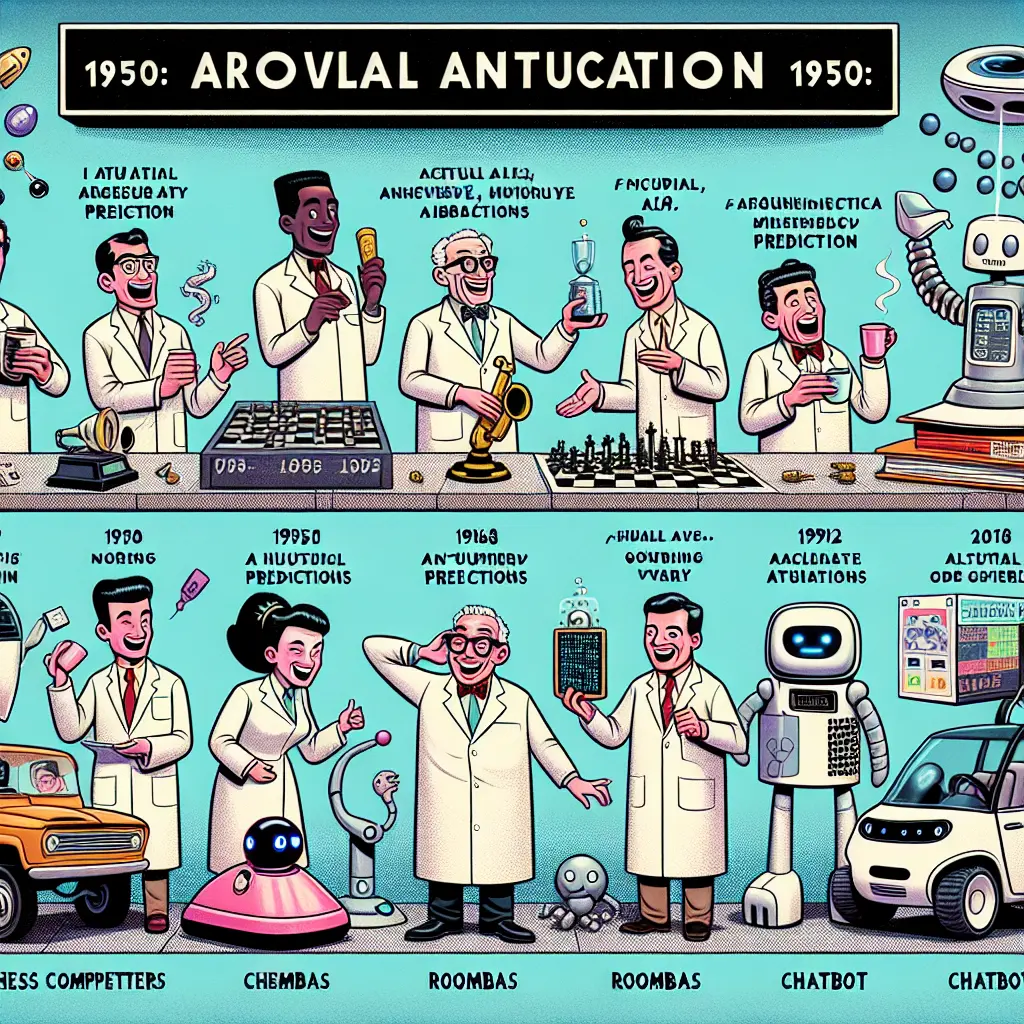
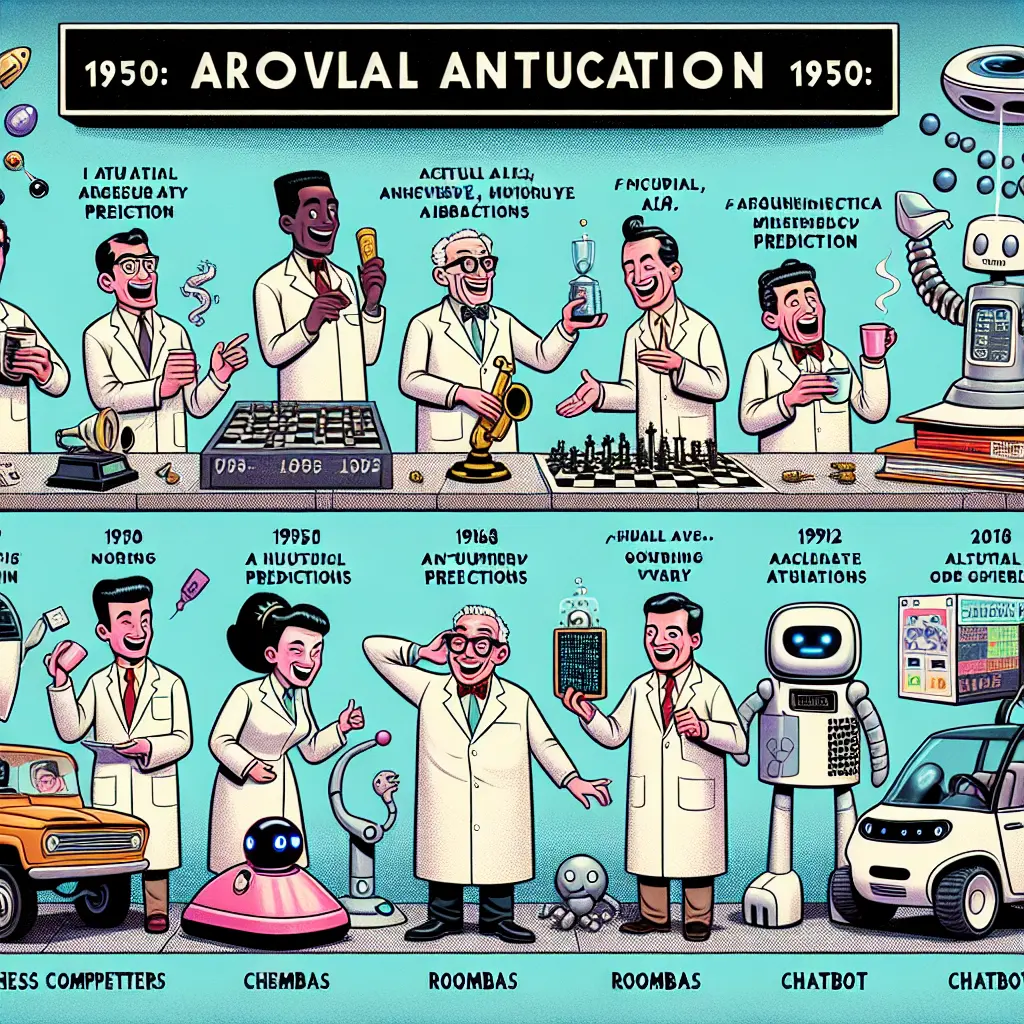
    AI predictions have been hilariously wrong since the 1950s. From claims that AI would master language by 1967 to beat chess grandmasters by 1968, experts regularly overestimated AI capabilities while underestimating human complexity. This funny timeline shows how even brilliant minds can’t predict technological progress—especially when it comes to artificial intelligence.

    When Experts Get It Spectacularly Wrong

    Have you ever been so confident about something that you’d stake your professional reputation on it? Well, that’s exactly what some of the brightest minds in computer science have been doing for decades with their AI predictions. And boy, did teh universe have a good laugh at their expense.

    related image

    I’m not talking about small misses here. I’m talking about predictions so wildly off-base that they’ve become legendary in tech circles—like that time in 1956 when researchers casually announced they’d solve the entire problem of artificial intelligence during a two-month summer workshop. Spoiler alert: they didn’t.

    Let’s take a delightful journey through the graveyard of AI predictions that aged about as well as milk left on a dashboard in July.

    The 1950s-60s: The “We’ll Have This Solved by Lunch” Era

    The 1950s and 60s were a time of unbridled optimism in AI research. These pioneers weren’t just hopeful—they were practically planning their “Mission Accomplished” parties.

    • 1956: At the Dartmouth Conference (the birthplace of AI as a field), organizers proposed that “significant advances” could be made if a group of 10 scientists worked together for just two months. They essentially thought they’d crack human-level intelligence over a summer break.
    • 1957: Herbert Simon predicted that within 10 years, a computer would be chess champion and prove a mathematical theorem. Half points for eventually getting chess right… just 30 years late.
    • 1967: Marvin Minsky, a giant in the field, confidently stated, “Within a generation, the problem of creating ‘artificial intelligence’ will be substantially solved.” Narrator: It wasn’t.


    What makes these predictions so funny in retrospect is the sheer confidence. It’s like watching someone declare they’ll climb Everest in flip-flops. The early AI researchers had no idea what they were up against—namely, that human intelligence is kinda complex. Who knew?

    The 1970s-80s: The “AI Winter Is Coming” Years

    After all those bold predictions face-planted into reality, funding dried up faster than you could say “neural network.” Welcome to the first AI Winter!

    During this period, AI research slowed dramatically as governments and corporations pulled funding. Turns out investors don’t love pouring money into projects that promised human-level intelligence but delivered programs that could barely understand “yes” and “no.”

    Sir James Lighthill’s infamous 1973 report to the British government concluded that “in no part of the field have discoveries made so far produced the major impact that was then promised.” Ouch. That’s academic-speak for “y’all were talking nonsense.”

    Expert Systems: The Corporate AI Fever Dream

    The 1980s saw a brief resurgence with “expert systems”—programs that attempted to encode human expertise in specific domains. Companies poured millions into these systems, convinced they would revolutionize everything from medicine to manufacturing.

    Narrator voice: They did not.

    While some expert systems proved marginally useful, they were brittle, expensive to maintain, and couldn’t adapt to new information. By the late 80s, most companies had abandoned their expert system projects, leading to the second AI winter.

    The 1990s-2000s: Chess Champions and Vacuum Cleaners

    The 90s finally brought some legitimate AI wins, though not quite the artificial general intelligence everyone had been promising for decades.

    • 1997: IBM’s Deep Blue defeated chess champion Garry Kasparov. This was genuinely impressive, but also a reminder that playing chess is not the same as general intelligence.
    • 2002: The first Roomba was released. Yes, the most practical AI application for many years was… a vacuum cleaner. Not exactly the robot butlers we were promised.

    During this period, predictions became slightly more cautious, but experts still had a tendency to underestimate the challenges. Ray Kurzweil began making his famous predictions about the singularity, which we’re still waiting to see materialize.

    related image

    The 2010s-Present: From Watson to ChatGPT

    The current era of AI has seen both incredible achievements and some spectacular face-plants:

    • 2011: IBM’s Watson won Jeopardy! and was gonna revolutionize healthcare. IBM executives predicted Watson would be a $10 billion business within a few years. Instead, Watson Health was sold off for scraps in 2022.
    • 2016: Self-driving cars were predicted to be “everywhere” by 2020. As I write this in my human-driven car, I’m pretty sure we’re not there yet.
    • 2022-2023: Large language models like ChatGPT have sparked both legitimate amazement and some wildly overblown predictions about AI replacing humans in creative fields “within months.”

    Why Are We So Bad at Predicting AI Progress?

    There’s something about artificial intelligence that makes smart people lose their minds a little. But why are these predictions so consistently wrong?

    1. Underestimating complexity: The human brain has roughly 86 billion neurons with trillions of connections. Creating intelligence isn’t exactly a weekend project.
    2. The “easy things are hard” paradox: Tasks that are easy for humans (like recognizing objects or understanding context in language) turned out to be incredibly difficult for computers.
    3. Technological optimism: There’s a natural human tendency to overestimate short-term progress while underestimating long-term changes.
    4. Career incentives: Bold predictions get attention, funding, and headlines. “We might make incremental progress over several decades” doesn’t make for exciting press releases.

    Prompt You Can Use Today

    Want to have some fun with AI predictions? Try this prompt with ChatGPT or Claude:

    Write a series of increasingly absurd predictions about AI capabilities from 2025 to 2100, in the style of overly optimistic computer scientists. Start reasonable and get more ridiculous with each decade. End with the most outlandish prediction possible.

    What’s Next for AI Predictions?

    If history has taught us anything, it’s that we should take AI timelines with enough salt to give your cardiologist nightmares. The field will certainly continue to advance—sometimes in surprising bursts of progress, sometimes through agonizing plateaus.

    The next time you hear someone confidently proclaim that AI will achieve human-level intelligence by [insert date], remember this funny history of incredibly smart people being incredibly wrong.

    One prediction I feel comfortable making: in twenty years, we’ll be laughing at the AI predictions being made today. Some things never change.

    Frequently Asked Questions

    Q: When did AI research officially begin?

    AI research formally began at the Dartmouth Workshop in 1956, where the term “artificial intelligence” was coined. The proposal for this workshop included the hilariously optimistic claim that significant advances could be made by ten people working together for just two months. Talk about setting yourself up for disappointment!

    Q: What was the biggest AI prediction failure?

    Many would point to Marvin Minsky’s 1967 prediction that the problem of creating artificial intelligence would be “substantially solved” within a generation. More than 50 years later, we’re still working on it. Though IBM’s Watson in healthcare might be the biggest commercial prediction failure—after massive hype, IBM sold Watson Health assets for about a quarter of what they invested.

    Q: Are today’s AI predictions more accurate?

    Today’s predictions tend to be more nuanced, but the pattern of overestimating short-term progress continues. We’ve gotten better at specific applications of AI but still regularly overestimate how quickly we’ll achieve artificial general intelligence. The lesson? Be skeptical of anyone giving specific timelines for major AI breakthroughs—especially if they’re trying to raise venture capital.

    Conclusion

    The history of AI predictions is basically a master class in human overconfidence. From the 1950s to today, brilliant people have consistently underestimated the difficulty of creating artificial intelligence while overestimating how quickly we’d get there.

    But there’s something endearing about this pattern of prediction and failure. It reflects our persistent optimism about technology and our drive to push boundaries—even when those boundaries push back harder than expected.

    Next time you see a headline proclaiming that AI will achieve some amazing feat “within five years,” maybe give it fifteen… or fifty. In the meantime, I’ll be waiting for my robot butler. Any day now, right?

    Enjoyed this trip through AI’s comically wrong predictions? Follow us for more tech reality checks that’ll make you feel better about your own failed predictions—like when you said you’d definitely start going to the gym this year.

  • My Favorite AI Fails (And What They Teach Us About the Future)

    My Favorite AI Fails (And What They Teach Us About the Future)

    AI failures aren’t just hilarious mishaps—they’re valuable glimpses into how these systems actually work. From generating bizarre images to giving confidently wrong answers, these failures reveal the limitations of current AI technology while hinting at both challenges and opportunities for future development.

    When Artificial Intelligence Gets Hilariously Real

    The first time I asked an AI to create an image of “a horse riding a man,” I knew I was in for something special. What I didn’t expect was a nightmarish horse-human centaur that looked like it belonged in a museum of modern art dedicated to fever dreams. I couldn’t stop laughing for a solid five minutes.

    That’s the thing about AI fails—they’re not just funny (though they absolutely are). They’re actually little windows into how these systems think, or rather, don’t think. They show us teh limitations of technology that many headlines would have us believe is nearly omniscient.

    related image

    As someone who’s spent countless hours playing with these systems, I’ve collected some truly spectacular fails. They range from mildly amusing to “wake your partner up at 3 AM because you’re cackling too hard to sleep.” Let’s break it down…

    The Classic AI Hallucinations (AKA Making Stuff Up With Confidence)

    My absolute favorite category of AI fails has to be when they make up information with the unwavering confidence of a toddler explaining how dinosaurs work.

    Case in point: I once asked a popular AI assistant for information about a completely fictional book I’d invented on the spot. Not only did it provide me with a detailed synopsis, it offered character analysis, critical reception, and even quoted fictional reviews. It even suggested similar books—all with absolute conviction!

    • Why this happens: AI models don’t “know” facts the way humans do. They predict what text should follow your prompt based on patterns they’ve learned from training data.
    • What it teaches us: These systems aren’t databases of truth—they’re sophisticated pattern-matching machines that can produce extremely convincing fabrications.

    related image

    The Uncanny Valley of AI Images

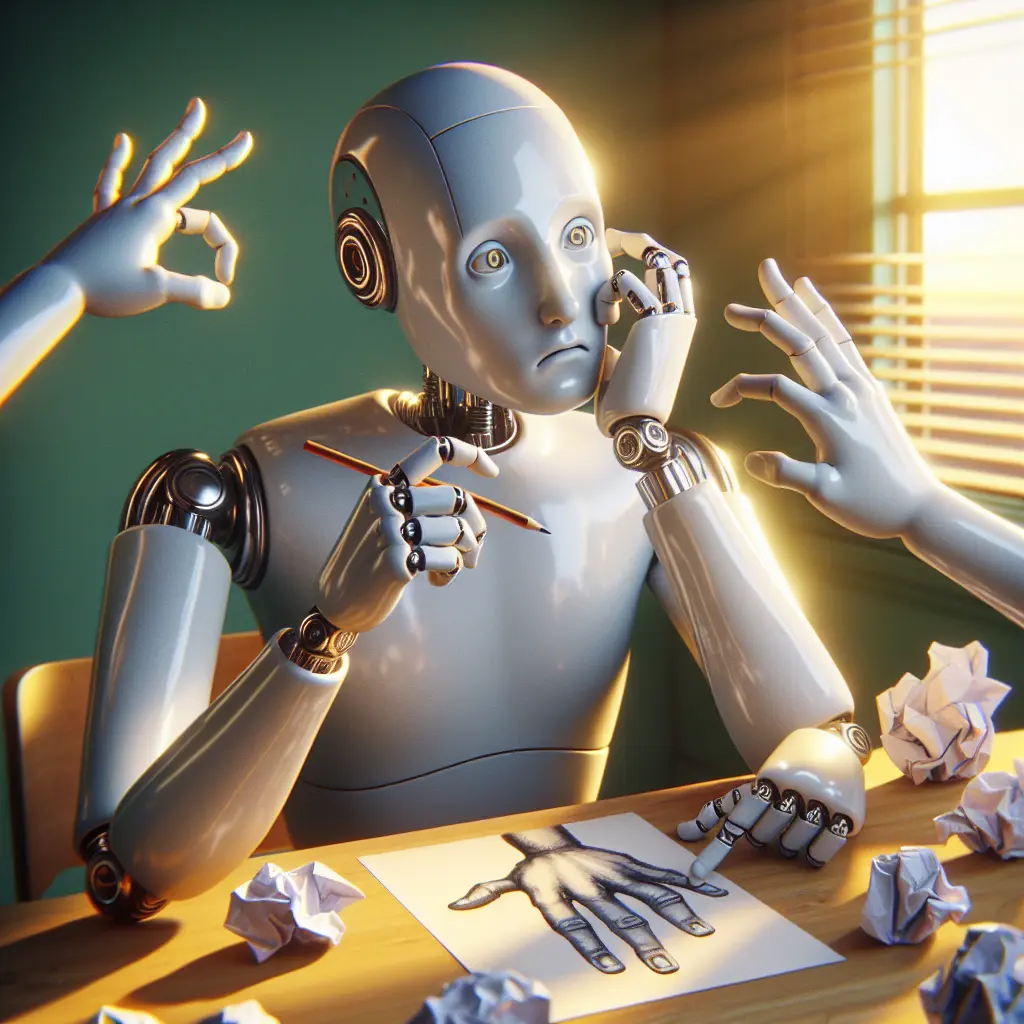
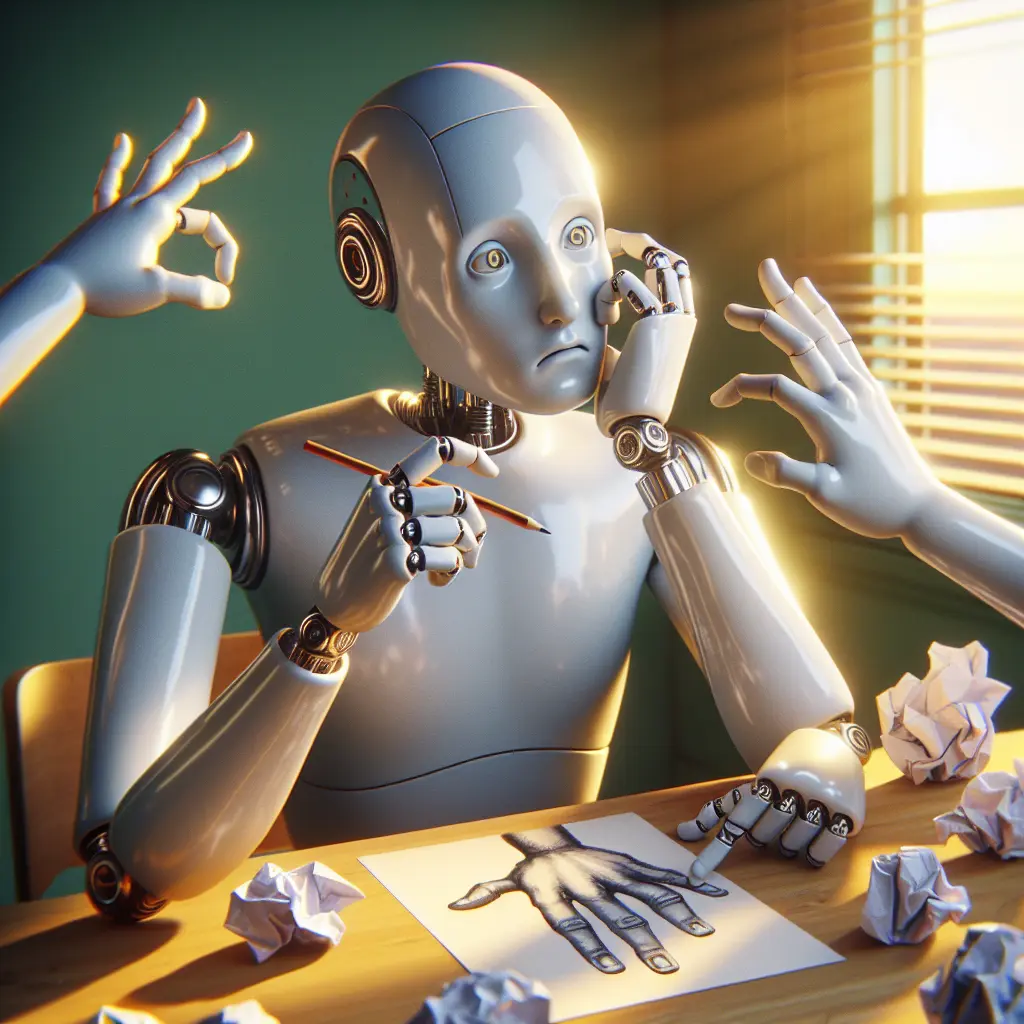
    If you’ve played with image generation AI, you’ve probably noticed it has… issues… with certain things. Human hands being the most notorious example. Five fingers? That’s ambitious. How about seven fingers, three thumbs, and what might be a small tentacle?

    One time I asked for “a businessman shaking hands with a client” and got back what looked like two aliens exchanging cephalopod appendages while wearing human suits. It was simultaneously hilarious and deeply unsettling.

    • Teeth are another AI struggle—often appearing as a uniform white bar or, worse, hundreds of tiny teeth where teeth should not be
    • Text in images typically comes out as gibberish that almost looks like real words
    • Background elements often melt into surrealist dreamscapes

    These visual glitches aren’t just amusing—they reveal how AI “understands” visual concepts differently than humans do. It hasn’t actually learned what hands ARE functionally; it’s just seen lots of pixels in hand-like arrangements.


    Mathematical Meltdowns

    Despite being built on mathematics, many AI models are surprisingly terrible at actual math. Ask a language model to calculate 17 × 28, and you might get a confident “476!” (It’s actually 476. I just got lucky with that example, which is exactly how AI sometimes gets math right—by accident).

    But ask something slightly more complex like “If I have 12 apples and give 3 to each of my 5 friends, how many do I have left?” and you might get “You have 9 apples left!” because it subtracted 3 from 12, completely missing that you gave away 15 apples total.

    Lost in Translation

    AI translation fails continue to be a goldmine of unintentional comedy. My personal favorite was when I asked an AI to translate a simple English phrase into Japanese, then back to English, repeating this process ten times. By the end, “I enjoy walking my dog in the park on sunny days” had morphed into “The sunshine festival celebrates canine processions through the ancestral grounds.”

    Which, honestly, I kinda prefer.

    What These Fails Actually Teach Us

    Beyond the laughs, these AI failures reveal something important about where we are in the development of artificial intelligence:

    • Pattern matching ≠ understanding – AI can recognize patterns without genuinely comprehending what they mean
    • Context is everything – Small changes in how you phrase a question can lead to wildly different answers
    • Confidence isn’t accuracy – AI often presents incorrect information with absolute certainty
    • Human oversight is essential – We still need humans to verify AI outputs, especially for critical applications

    A Prompt You Can Use Today

    Want to explore some entertaining AI fails yourself? Try this prompt with your favorite AI assistant:

    I'd like to play a game to reveal interesting AI limitations. Generate 5 different questions or tasks that you think might confuse your language model abilities. Then try to answer each one, and honestly evaluate where you struggled or might have gotten things wrong.

    What’s Next for AI?

    These fails aren’t just funny—they’re signposts toward the next generations of AI development. Each limitation becomes a research problem to solve, each weird output a puzzle to unravel.

    I’m gonna keep collecting these AI fails not just because they make me laugh (though they absolutely do), but because each one tells us something about how these systems work—and don’t work. Maybe someday they’ll stop making these mistakes… but until then, I’ll be here documenting the journey one bizarre hand-rendering at a time.

    Frequently Asked Questions

    Q: Why do AI chatbots make up information?

    AI chatbots don’t actually “know” facts—they predict text based on patterns in their training data. When asked something they don’t know, instead of saying “I don’t know,” they often generate plausible-sounding but completely fabricated responses because they’re designed to provide answers rather than admit ignorance.

    Q: Are funny GPT mistakes actually harmful?

    While many AI mistakes are harmless and humorous, some can be problematic or harmful, especially when people rely on AI for critical information about health, finance, or safety. Even funny mistakes highlight why we shouldn’t blindly trust AI systems without verification.

    Q: How can I spot when AI gets something wrong?

    Look for overly confident statements about obscure topics, logical inconsistencies, or information that seems too convenient. For factual claims, always verify with trusted sources. If an AI provides citations, actually check them—they’re often made up or misrepresented.

    Conclusion: Embracing the Beautiful Mess

    AI failures aren’t just entertaining blunders—they’re valuable insights into both the current limitations and future potential of artificial intelligence. Each weird image, nonsensical answer, or confidently stated falsehood tells us something important about how these systems work underneath their sleek interfaces.

    As we continue developing and refining AI technology, these fails serve as both cautionary tales and guideposts for improvement. They remind us that despite impressive capabilities, AI remains a tool created by humans, reflecting our imperfections while striving toward something better.

    Enjoyed this roundup of AI’s most facepalm-worthy moments? Share your favorite AI fails in the comments below, or subscribe for more tech insights that don’t take themselves too seriously!